













Breast-Feeding Rates Continue to Rise, CDC Says

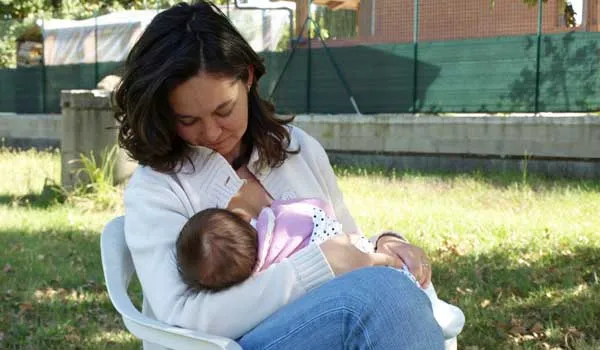
The percentage of babies who are breast-fed in the United States continues to rise, according to new estimates from the Centers for Disease Control and Prevention.
Between 2000 and 2010, the percentage of mothers who said they breast-fed their babies in the early postpartum period increased from 71 percent to nearly 77 percent, according to the report.
The percentage who said they continued breast-feeding until their babies at least 6 months old increased from 34 percent to nearly 50 percent, and the percentage who said they were still breastfeeding after a year increased from about 16 percent to 27 percent, the CDC said.
"This is great news for the health of our nation because babies who are breastfed have lower risks of ear and gastrointestinal infections, diabetes and obesity, and mothers who breastfeed have lower risks of breast and ovarian cancers," Dr. Tom Frieden, director of the CDC, said in a statement. "It is critical that we continue working to improve hospital, community and workplace support for breastfeeding mothers and babies," Frieden said.
The American Academy of Pediatrics recommends exclusively breast-feeding infants for six months, in addition to giving the baby doctor-recommended supplements to ensure that the child gets vital vitamins and minerals not found in high quantities in breast milk. After that, women should continue to breast-feed their baby until the first birthday, in addition to feeding him or her other foods, the AAP says.
Of the 49 percent of women who said they were breast-feeding at six months in 2010, about 16 percent said they were exclusively breast-feeding. [9 Conditions That Pregnancy May Bring]
The percentage of hospitals with practices that promote breastfeeding, such as keeping mothers and babies together after birth, also increased, the CDC said. The percentage of hospitals that said newborns were in the same room as their mothers for at least 23 hours a day increased from 30 percent in 2007 to 37 percent in 2011.
Get the world’s most fascinating discoveries delivered straight to your inbox.
"The period right after a baby is born is a critical time for establishing breastfeeding," Janet L. Collins, director of CDC’s Division of Nutrition, Physical Activity, and Obesity, said in a statement. Allowing babies to stay in the same room as their mothers and have skin-to-skin contact "help ensure that mothers and babies stay together and are able to start and continue breastfeeding. These are meaningful steps hospitals can take to support mothers and families and help improve breastfeeding rates," Collins said.
Earlier this year, the CDC released a report about rising breast-feeding rates, but the most recent data in that study was from 2008.
Follow Rachael Rettner @RachaelRettner. Follow LiveScience @livescience, Facebook & Google+. Original article on LiveScience.com.

Rachael is a Live Science contributor, and was a former channel editor and senior writer for Live Science between 2010 and 2022. She has a master's degree in journalism from New York University's Science, Health and Environmental Reporting Program. She also holds a B.S. in molecular biology and an M.S. in biology from the University of California, San Diego. Her work has appeared in Scienceline, The Washington Post and Scientific American.