













West Nile Virus Spreads More Easily, Study Finds
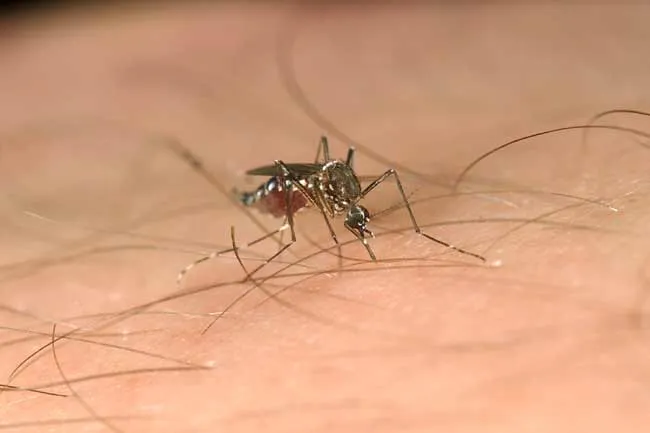
Mosquitoes appear to get infected with West Nile virus more quickly than previously thought, according to a new study that also discovered mammals can transmit the deadly agent.
West Nile, which killed 88 people in the United States last year and more in previous years, is typically thought to be transmitted by birds. Infected mosquitoes can in turn pass the virus to humans.
It had been believed that once an infected mosquito bit a bird, the virus needed about a week to build up in the bird before another mosquito could be infected by biting the same bird.
The new study shows West Nile can infect a new mosquito within an hour after entering an avian host.
"We just didn't know this could happen," said lead author Stephen Higgs of the University of Texas Medical Branch at Galveston told LiveScience.
The results were published online Monday in the Proceedings of the National Academy of Sciences.
Surprising results
Get the world’s most fascinating discoveries delivered straight to your inbox.
Higgs and his colleagues allowed mosquitoes infected with West Nile to bite an uninfected, anesthetized lab mouse. After five minutes, they introduced uninfected mosquitoes and allowed them to feed simultaneously with the infected mosquitoes. An hour later, they tested the second batch of mosquitoes.
Between two and six percent of the uninfected batch had become infected. In one trial, in which only one infected mosquito was allowed to bite the mouse, two out of 87 uninfected mosquitoes became infected.
"The virus was passed within an hour, although we suspect it was probably instantaneous," Higgs said. "When you consider how many mosquitoes are out there, two percent could rapidly increase the number of infected mosquitoes."
Higgs and his colleagues were also surprised to find that mammals can transmit the virus. Scientists previously thought mammals could harbor and die from the virus but not pass it on.
"Mammal vertebrates had been considered a dead-end," Higgs said. "Each year, lots of horses die [of West Nile virus] but they are also bitten by many uninfected mosquitoes. Now we know that they may be passing the virus along."
It is too early to know if humans can transfer the virus.
"It's a bit of a jump, and the reason is that people have a good defensive mechanism against mosquitoes," Higgs said. "I wouldn't imagine people would let so many mosquitoes bite them - we're pretty good swatters."
Since turning up in the United States for the first time in 1999, West Nile virus has spread to nearly every state. In 2002, 4,156 human cases and 284 deaths were reported in the United States. A peak of 9,862 cases were reported in 2003, and last year the number dropped to 2,470 cases and 88 deaths.
Nearly 80 percent of people infected with West Nile virus show no symptoms at all. Among the other 20 percent, symptoms can include high fever, headache, neck stiffness, stupor, disorientation, tremors, convulsions, muscle weakness, vision loss, numbness and paralysis.
These symptoms may last several weeks, and neurological effects can be permanent.
Related Stories
- West Nile Virus Cases by State in 2004
- Natural Mosquito Repellent Being Developed
- Mosquitoes Invade the South
- Flight of the Fly