













Scientists Reverse Sex Roles in Fruit Flies

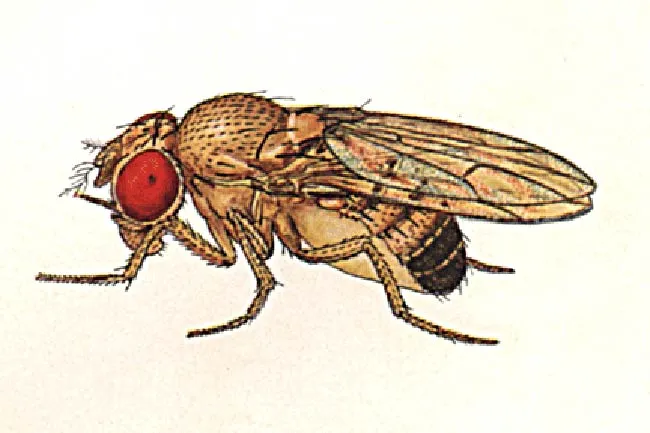
Scientists have discovered it is surprisingly easy to reverse sex roles in fruit flies. By changing just one gene, they can make a female perform the courtship ritual of the male.
She'll sing, vibrate her wings and lick a potential female suitor. But it's all for naught, as nature doesn't let the flip-flopped sexual advances proceed to any productive conclusion.
Previous studies found that a single gene controls courtship in fruit flies. Males have a form of the gene that produces a protein, dubbed "fruitless," that governs their complex rituals designed to impress a mate. It also is responsible for the males' preference to breed with females. In females, the gene produces a different form of the fruitless protein.
Female flies with the male version of fruitless behave like males. The result must create quite a buzz in the fruit fly community.
"They courted other females, just as a normal male would, except that their sexual advances didn't get very far," explained Barry Dickson of the Austrian Academy of Sciences.
The sexually altered females also danced for certain males -- those that express female pheromones.
The study has no immediate implications for human sexuality, Dickson told LiveScience. But it does figure into on an ongoing debate about whether a single gene can profoundly affect behavior or if behavior is too complex to be reduced to the influence of any one gene.
Get the world’s most fascinating discoveries delivered straight to your inbox.
Dickson said a fly's flight gene, if one exists, obviously can't be used to make a mouse fly. But the new discovery and other studies suggest that single genes can influence hundreds of other genes, even triggering the development of complex things like eyes or limbs.
The research is detailed in this week's issue of the journal Cell.
Related Stories

Robert is an independent health and science journalist and writer based in Phoenix, Arizona. He is a former editor-in-chief of Live Science with over 20 years of experience as a reporter and editor. He has worked on websites such as Space.com and Tom's Guide, and is a contributor on Medium, covering how we age and how to optimize the mind and body through time. He has a journalism degree from Humboldt State University in California.