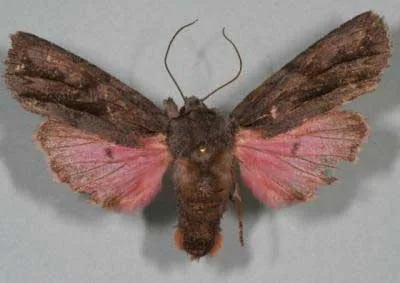
Pink Moth Discovered in Arizona
Get the world’s most fascinating discoveries delivered straight to your inbox.
You are now subscribed
Your newsletter sign-up was successful
Want to add more newsletters?
Delivered Daily
Daily Newsletter
Sign up for the latest discoveries, groundbreaking research and fascinating breakthroughs that impact you and the wider world direct to your inbox.
Once a week
Life's Little Mysteries
Feed your curiosity with an exclusive mystery every week, solved with science and delivered direct to your inbox before it's seen anywhere else.
Once a week
How It Works
Sign up to our free science & technology newsletter for your weekly fix of fascinating articles, quick quizzes, amazing images, and more
Delivered daily
Space.com Newsletter
Breaking space news, the latest updates on rocket launches, skywatching events and more!
Once a month
Watch This Space
Sign up to our monthly entertainment newsletter to keep up with all our coverage of the latest sci-fi and space movies, tv shows, games and books.
Once a week
Night Sky This Week
Discover this week's must-see night sky events, moon phases, and stunning astrophotos. Sign up for our skywatching newsletter and explore the universe with us!
Join the club
Get full access to premium articles, exclusive features and a growing list of member rewards.
A new moth that is hardly dull has been discovered in the Chiricahua Mountains, east of Tucson, Arizona. The moth has pink wings.
University of Arizona biologist Bruce Walsh, who studies plant and animal breeding, was out in the mountains collecting moths, a hobby of his. Walsh captures them by illuminating a sheet with mercury vapor lamps. Moths are — you guessed it — attracted by the lights, and land on the sheet.
"This large moth flew in and we didn't think much of it because there is a silk moth very much like it, a Doris silk moth that feeds on pines that has dark wings with pink on the hind wings," Walsh explained. "It's fairly common there."
On closer inspection, though, the moth, a female, appeared to be a different species from a different family. Walsh said it currently is the only known individual. DNA testing confirmed it is a new species.
He named it Lithophane leeae after his wife, Lee, who likes the color pink.
The discovery is detailed in the journal Zoo Keys.
- Gallery: Colorful Butterflies
- Mystery of Moth Flight Uncovered
- Hunted Becomes Hunter as Moths Mimic Spiders
Get the world’s most fascinating discoveries delivered straight to your inbox.