













Sports-Related Concussions Increasing, Study Shows

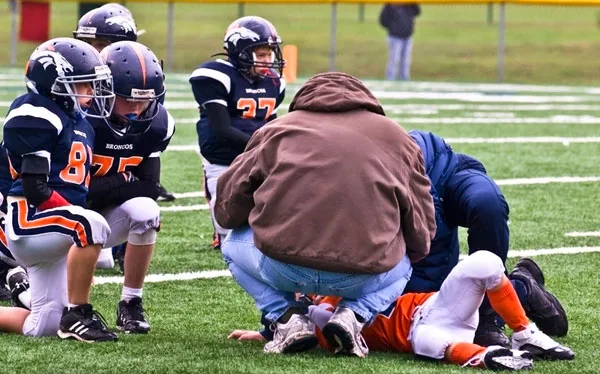
The number of children visiting emergency departments for concussions they experienced while playing organized team sports has risen dramatically over the last 10 years, according to a new study.
The results show emergency department visits for football, basketball, baseball, soccer and ice hockey-related concussions doubled from 1997 to 2007 for children aged 8 to 13, and increased by over 200 percent for children aged 14 to 19.
The increase occurred despite a 13 percent decline in total participants in these sports.
Experts have hypothesized that this rise may be due to an increasing number of available sports activities, increasing competitiveness in youth sports, and increasing intensity of practice and play times, said Dr. Lisa Bakhos, who conducted the research while at Hasbro Children's Hospital in Providence, R.I. However, the rise might also be a result of increased awareness and reporting of concussion incidents, she said.
The findings underscore the importance of developing guidelines to determine when young athletes can return to play after a concussion, the researchers say.
Increasing concussions
Bakhos and colleagues used information from two national databases to estimate the number of emergency department visits.
Get the world’s most fascinating discoveries delivered straight to your inbox.
There were 502,000 visits for concussions in children aged 8 to 19 years in the period from 2001 through 2005; of those, 65 percent were in the 14- to 19-year old age group. Over the same period, approximately four in 1,000 children aged 8 to 13 and six in 1,000 teens aged 14 to 19 had an emergency department visits for a sport-related concussion.
For the younger children, emergency department visits for organized team sport-related concussions increased from about 3800 in 1997 to about 7600 in 2007. For older children, emergency department visits increased from about 7000 to more than 21,000 over the same time period.
Better guidelines
"Our assessment highlights the need for further research and injury prevention strategies into sport-related concussion," said study author James Linakis, also of Hasbro Children's Hospital.
"This is especially true for the young athlete, with prevailing expert opinion suggesting that concussion in this age group can produce more severe neurologic after-effects, such as prolonged cognitive disturbances, disturbed skill acquisition, and other long-term effects," he said.
Despite the apparent increase in concussions in youth athletes, there are no comprehensive guidelines for when young athletes should return to play after a concussion, the researchers say.
There are also no evidence-based guidelines for how treatment of these injuries should be managed. There is agreement, however, that the treatment of young children cannot be managed in the same way as that of older adolescents.
"Children need not only physical, but cognitive rest, and a slow-graded return to play and school after such injuries," Linakis said. Return-to-play assessments might include such strategies as neuropsychological testing, functional MRI, visual tracking technology and balance dysfunction tracking.
The study is published in the September issue of the journal Pediatrics.
