













Bad at Directions? Get Out More, Study Suggests

Ever enter a strange hallway or an unfamiliar street after being inside and have trouble getting your bearings?
You're not alone of course. Even in the animal world, such confusion has been routinely observed.
A new study suggest a way to battle the problem by changing habits early in life.
The problem is we depend in part on geometry to get oriented, scientists say, and at least some of that geometry can look awfully familiar in two directions, as with the case of an identical-looking door at each end of a hallway.
But a new study reveals at least one type of bird that can ignore the geometry of its surroundings and focus instead on a single prominent landmark to find its way.
The discovery was made because the scientists used wild birds in their test. Caged birds used in previous studies had the same difficulties as humans, getting confused by similar walls and angles appearing in two opposite directions.
"This has been observed in every species tested, even when landmarks alone could be used, suggesting that animals are predisposed to go by geometry," said study team member Chris Sturdy, a professor of psychology and member of the Center for Neuroscience at the University of Alberta.
Get the world’s most fascinating discoveries delivered straight to your inbox.
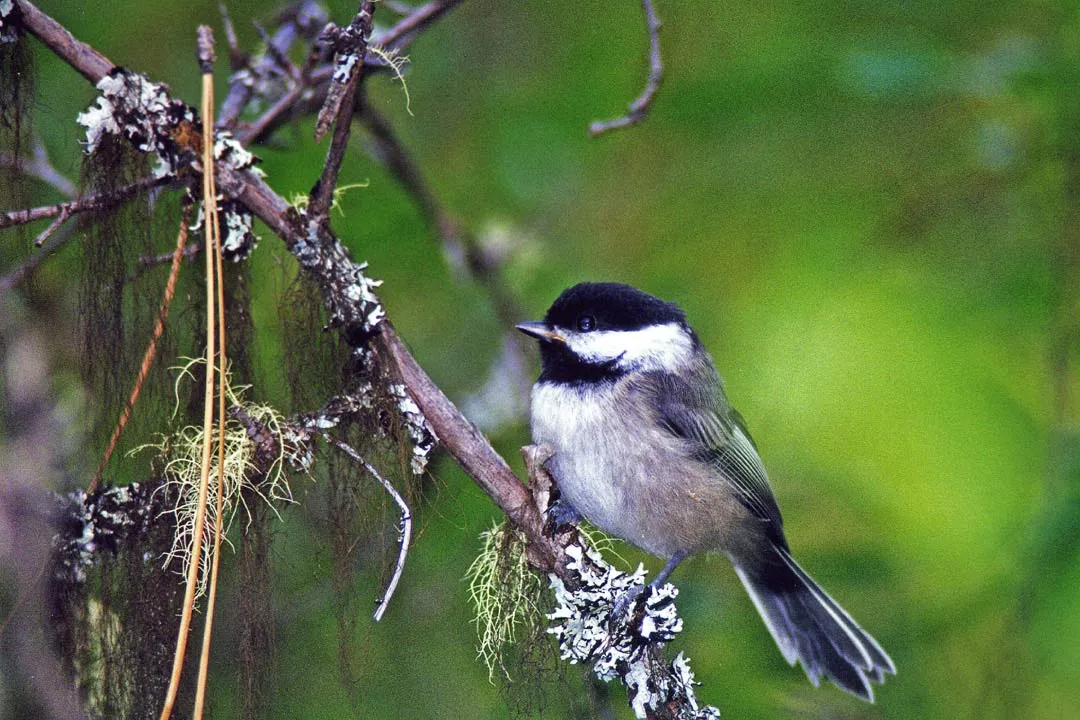
The wild-caught mountain chickadees were taught to follow angular features to reach food. But when allowed to use a landmark -- a blue wall -- they ignored the rest of the geometry to reach their goal.
The finding suggests that if you experience orientation problems, then perhaps you've been cooped up too long.
"This discovery points to the fact that our early experiences influence how we solve such problems and could mean that by varying the environments that we encounter early in life, we could broaden and hone our spatial navigation abilities," Sturdy's team writes.
The results are published in the July issue of the journal Biology Letters.
- Birds of Prey: Spot Today's Dinosaurs
- Butterfly's Navigation Secret Revealed in Flight Simulator
- Bird's Warning Chirps Reveal Surprising Smarts
