














Why Do Bulls Charge When they See Red?
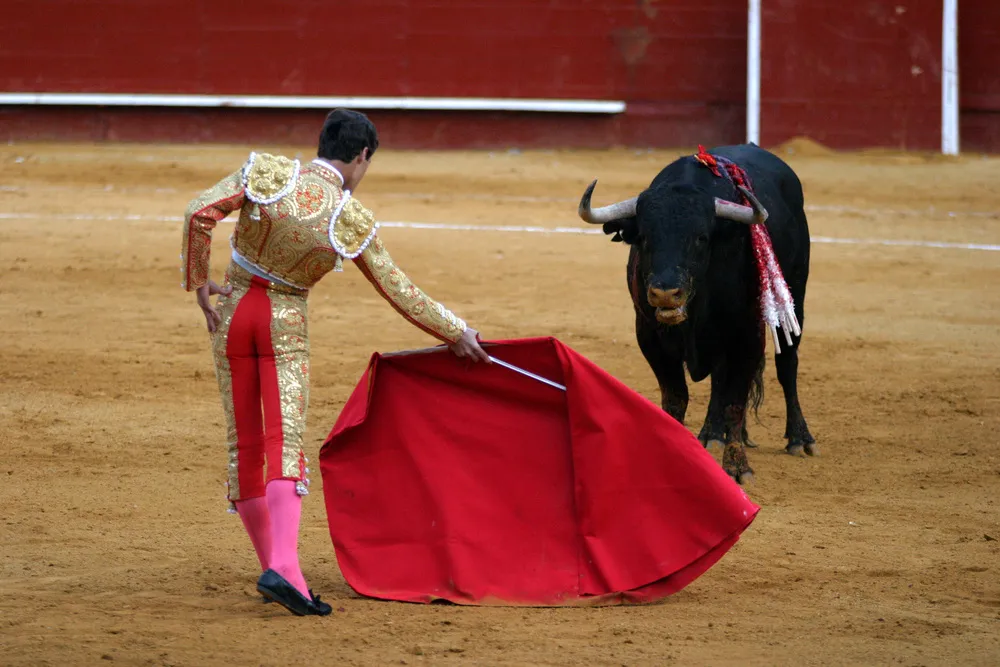
Bullfighting conjures a common image: An angry bull charging at a matador’s small red cape, the muleta. But, why does the beast charge at the sight of red?
Actually, it doesn’t. Bulls, along with all other cattle, are color-blind to red. Thus, the bull is likely irritated not by the muleta’s color, but by the cape’s movement as the matador whips it around. In support of this is the fact that a bull charges the matador’s other cape — the larger capote — with equal fury. Yet this cape is magenta on one side and gold or blue on the other.
Related: What Really Happens to Fighting Bulls After the Fight?
Still don’t believe it? In 2007, the Discovery Channel’s MythBusters tested a live bull on color versus movement in three separate experiments. First, they put three stationary flags, which were red, blue and white, in the bull’s enclosure. The bull charged all three flags regardless of color. Next, they put three dummies dressed in red, blue and white in the ring, and again the bull charged all three without discrimination (and actually charged the red dummy last).
Finally, they put a live person dressed in red in the ring with the bull. That person stood still while two cowboys — not in red — moved around the ring. The bull went after the moving cowboys and left the motionless red-clad person alone.
So, if a bull can’t see red, why is the muleta red? The small cape comes out in the last stage of the bullfight, when the bull meets its end, and its color helps mask one of the more gruesome aspects of a bull fight: splatters of the animal's blood.
Just don’t tell that to everyone's favorite pacifist cartoon bull, Ferdinand:
Get the world’s most fascinating discoveries delivered straight to your inbox.