













Mammoth Bones Found in San Diego

Updated at 9:20 a.m. ET, Friday, Feb. 6
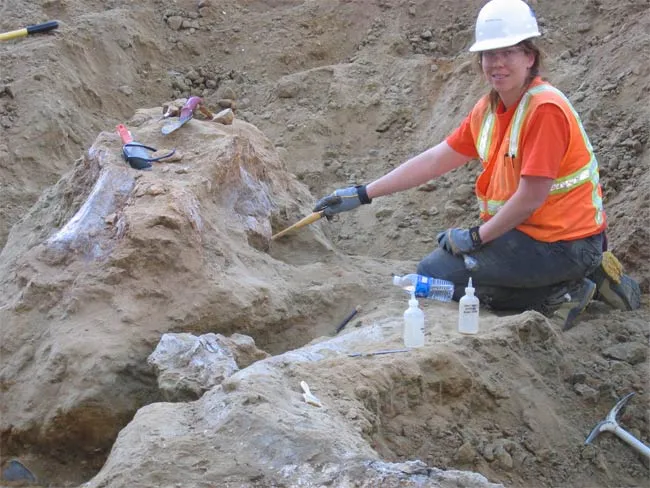
The skull and other remains from an adult mammoth, a mega-mammal that went extinct in the last Ice Age, were unearthed this week at a construction site in downtown San Diego.
The bones, including a tusk, skull and foot bones, belonged to an adult Columbian mammoth (Mammuthus columbi), according to The San Diego Union-Tribune. The mammoth's tusk was slightly more than 10 feet (3 meters) in length.
These elephant-like creatures lived during the Late Pleistocene (the Pleistocene lasted from about 1.8 million to 10,000 years ago), plodding over what is now the United States and as far south as Nicaragua and Honduras.
"This specimen is not a woolly mammoth, instead it is a Columbian Mammoth. Columbian Mammoths were larger, with males up to 14 feet (4 meters) high at the shoulders," Thomas Deméré, paleontologist at the San Diego Natural History Museum, told LiveScience.
Deméré estimates the remains are 500,000 years old. Museum paleontologists are now excavating the bones.
"It's a pretty important find," Patrick Sena, a paleontologist at the museum who identified the bones yesterday morning, told the newspaper. "The mammoth itself is a pretty rare find, and this is a really intact skull, foot bones and tusk." (Sena monitors construction sites for the museum and has found mammoth bones at other California sites.)
Get the world’s most fascinating discoveries delivered straight to your inbox.
The workers, constructing the new Thomas Jefferson School of Law campus, noticed what they thought was a fossilized redwood Tuesday afternoon. When Sena examined the material and realized it was actually the mammoth's right tusk, he called for work to stop in that corner of the construction zone.
"I saw a piece of tusk fragment and started digging on in," Sena told the Union-Tribune.
As for how the mammoth died: "At this point we cannot determine the cause of death," Deméré said. "However, we can say it wasn't due to old age."
- Mammoth News, Information and Images
- Catastrophic Comet Chilled and Killed Ice Age Beasts
- Woolly Mammoths Existed in Two Distinct Groups
