














Why Do Our Mouths Water?

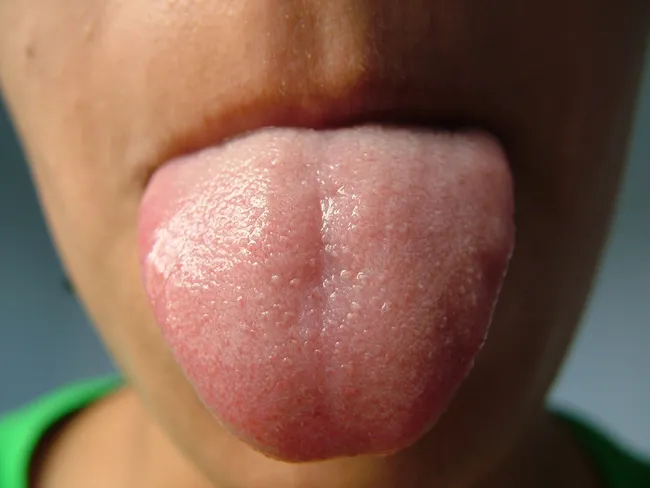
Picture a nice tender, juicy steak, some piping hot, buttery mashed potatoes or a sweet, yet tart lemon meringue pie. Is your mouth watering yet?
All that saliva accumulating in your mouth isn't just an indicator that you find some particular meal delectable — it's also an important step in the digestion of said delicious food.
Digestion begins as soon as you shovel a forkful of those mashed potatoes into your mouth and masticate (or chew) the food. Your mouth secretes saliva (up to 1.5 quarts a day) that moistens your food and also contains enzymes (special kinds of proteins) that help break down the food before it reaches your stomach.
One of these enzymes, called salivary amylase, breaks down starches, and a new study finds that humans carry extra copies of the gene that encodes the enzyme, which may have helped spur human evolution.
The study, published in the Sept. 9 issue of the journal Nature Genetics, found that humans have more copies of the gene than their ape relatives. The humans sampled carried as many as 15 copies each, while chimpanzees had only two.
The study also found a correspondence between the number of copies of the gene and the amount of starch in a population's diet. Members of the Tanzanian Hadza tribe, which ate more tubers and roots, had more copies of the gene than their neighbors (the Datog) who mostly raised livestock.
The finding supports theories that some change in the diet of early humans fueled the simultaneous increases in the size of human brains and bodies, as well as the expansion of our ancestors' geographic range. So our ability to readily digest those buttery mashed potatoes may be part of the reason we are what we are today.
Get the world’s most fascinating discoveries delivered straight to your inbox.
Follow Life's Little Mysteries on Twitter @llmysteries. We're also on Facebook & Google+.

Andrea Thompson is an associate editor at Scientific American, where she covers sustainability, energy and the environment. Prior to that, she was a senior writer covering climate science at Climate Central and a reporter and editor at Live Science, where she primarily covered Earth science and the environment. She holds a graduate degree in science health and environmental reporting from New York University, as well as a bachelor of science and and masters of science in atmospheric chemistry from the Georgia Institute of Technology.