














Young Flamingos Banded in Bahamas for Study

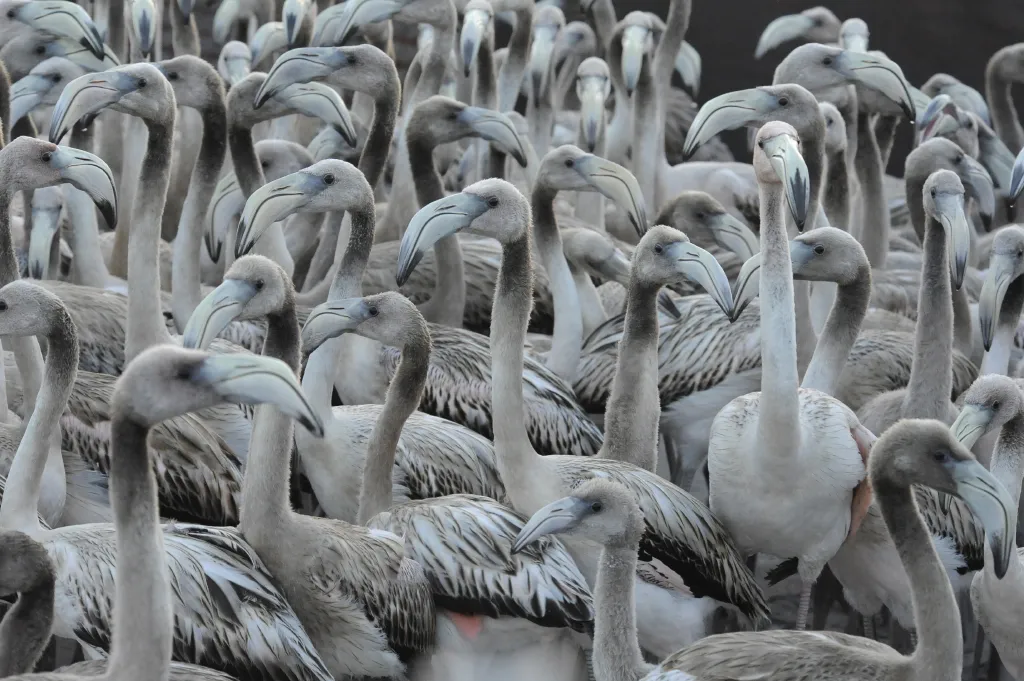
Researchers from the Wildlife Conservation Society's Bronx Zoo flew south in June to the Bahamas' Inagua National Park, where they banded nearly 200 juvenile Caribbean flamingos to study their migration and movement patterns. The bands will help them identify the animals in the future.
They also measured their size and gave the birds physicals to assess their health, taking blood samples to perform genetic tests as part of a wider regional study of the creatures. Scientists also made them stick out their tongues, taking mouth swabs to test for avian diseases.
Weather conditions have been perfect this year for flamingos and they have bred in large numbers, according to a release from the Wildlife Conservation Society.
The animals lay a single white egg on a mud mound between May and August, which takes about a month to incubate. Both parents help raise the young for several years, and the birds can live up to 40 years. They are listed as a species of least concern by the International Union for the Conservation of Nature.
Follow OurAmazingPlanet for the latest in Earth science and exploration news on Twitter @OAPlanet. We're also on Facebook and Google+.
Get the world’s most fascinating discoveries delivered straight to your inbox.
