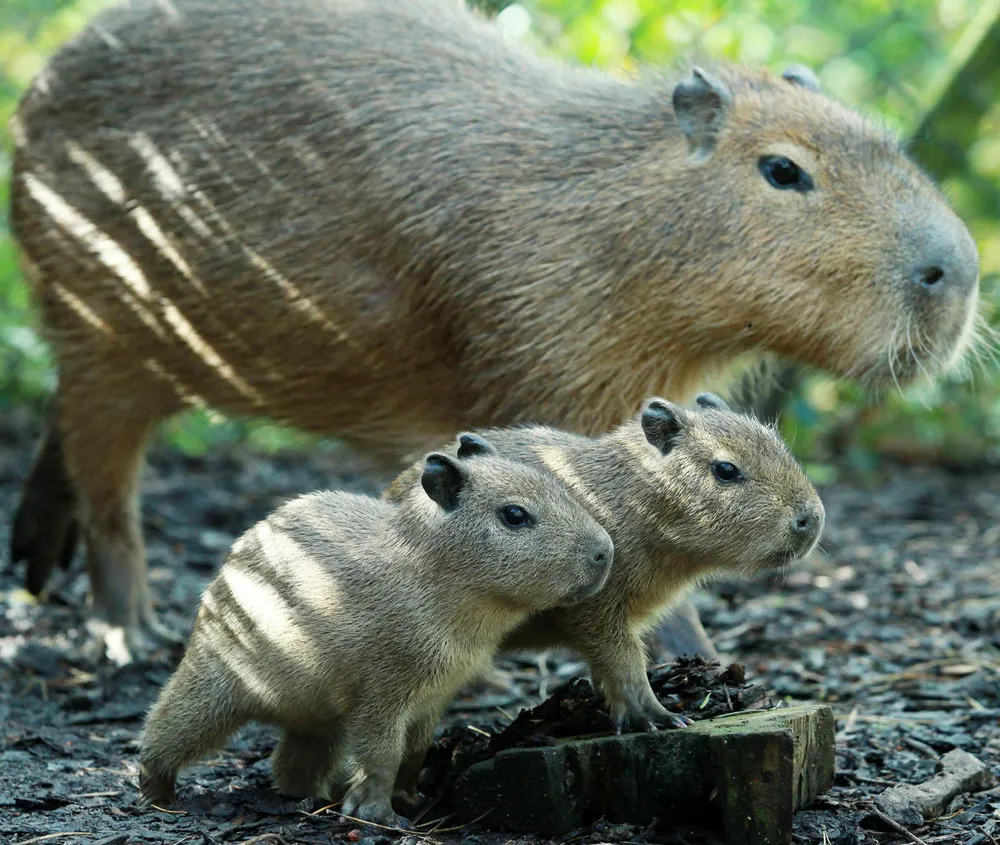
Belfast Zoo Welcomes Baby Capybaras
Get the world’s most fascinating discoveries delivered straight to your inbox.
You are now subscribed
Your newsletter sign-up was successful
Want to add more newsletters?
Delivered Daily
Daily Newsletter
Sign up for the latest discoveries, groundbreaking research and fascinating breakthroughs that impact you and the wider world direct to your inbox.
Once a week
Life's Little Mysteries
Feed your curiosity with an exclusive mystery every week, solved with science and delivered direct to your inbox before it's seen anywhere else.
Once a week
How It Works
Sign up to our free science & technology newsletter for your weekly fix of fascinating articles, quick quizzes, amazing images, and more
Delivered daily
Space.com Newsletter
Breaking space news, the latest updates on rocket launches, skywatching events and more!
Once a month
Watch This Space
Sign up to our monthly entertainment newsletter to keep up with all our coverage of the latest sci-fi and space movies, tv shows, games and books.
Once a week
Night Sky This Week
Discover this week's must-see night sky events, moon phases, and stunning astrophotos. Sign up for our skywatching newsletter and explore the universe with us!
Join the club
Get full access to premium articles, exclusive features and a growing list of member rewards.
Two little bundles of joy born recently at the Belfast Zoo actually belong to the world's largest rodent species.
Twin capybara babies, named Gus and Jacques, were born to parents Charlie and Lola on April 3.
"It's definitely an exciting time and I am sure that zoo visitors will enjoy visiting our new arrivals, Gus and Jacques," said zoo manager Mark Challis.
Capybaras are native to South America. Their scientific name (Hydrochoerus) means "water hog," and although they are technically from the rodent family, this name relates to the fact that capybaras are semi-aquatic animals and love the water. In fact, capybaras have webbed feet and can stay underwater for up to five minutes at a time, to hide from predators.
Get the world’s most fascinating discoveries delivered straight to your inbox.