














Massive Smoke Plume Spied from Space

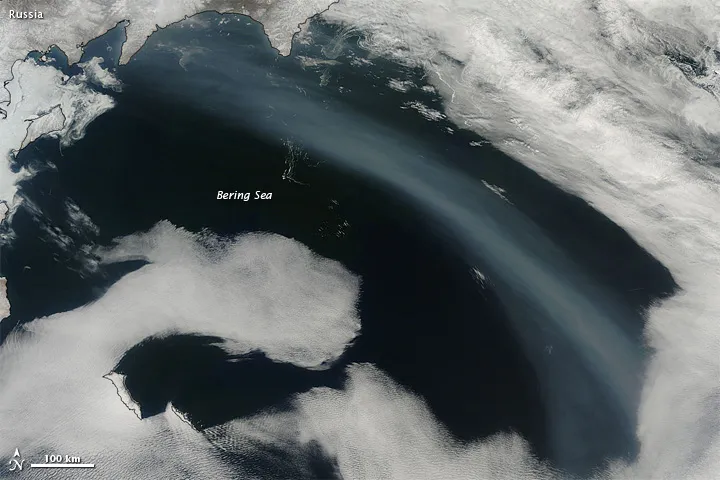
As a diaphanous plume of smoke stretched out across the Bering Sea in early May, a passing satellite snapped a picture of the graceful haze.
A lovely image, indeed, yet it's likely the smoke is the result of a fiery inferno burning many miles to the west. In northern Russia, wildfires have been burning for days.
Dozens of fires have been raging in the mountains south of Lake Baikal, the deepest lake on Earth, and models suggest that smoke from the region could reach the Bering Sea in just a few days.
In a study published in 2004, scientists tracked the movement of smoke from Russian wildfires, and found that it typically travels in one of two directions: either northwest toward Scandinavia, or east toward the Sea of Okhotsk.
If the smoke blows east, if often crosses the Bering Sea and moves toward Alaska and Canada.
According to Russian media reports, more than 300 people, including 50 paratroopers and 100 firefighters, have been deployed to battle the fires burning in the remote Lake Baikal region.
Smoke from the fires has also affected air quality in China.
Get the world’s most fascinating discoveries delivered straight to your inbox.
Follow OurAmazingPlanet for the latest in Earth science and exploration news on Twitter @OAPlanet and onFacebook.
