














Congo: Earth's Second Set of 'Lungs'

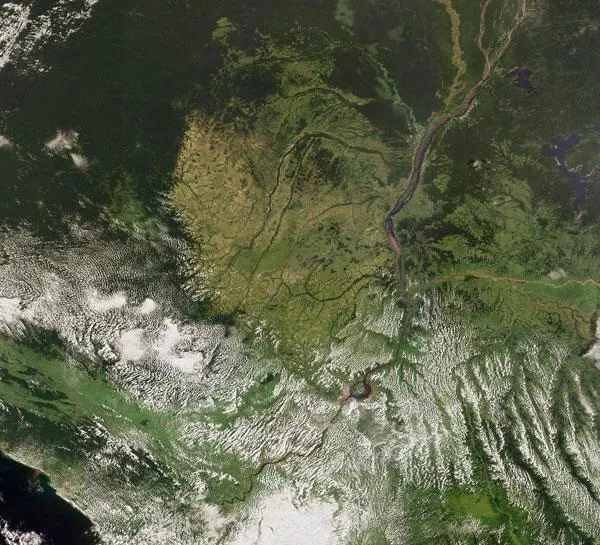
The Congo River Basin's rainforests are the second largest in the world, after the Amazon.
The Congo River is Africa's second longest river after the Nile. The river flows along some 2,900 miles (4,700 kilometers) from its source in Zambia to the Atlantic Ocean (visible in bottom left corner). Its river system is fed by some 10,000 streams and drains an area the size of Europe.
The expansive rainforests of the Congo basin covers an area of more than 1.5 million square miles (4 million square km), covering parts of the Democratic Republic of Congo (visible to the east of the Congo River), most of the Republic of the Congo (visible to the west of the Congo River), Gabon (visible in dark green along the left side), Equatorial Guinea (above Gabon), and southern parts of Cameroon and the Central African Republic.
The size of the Congo rainforests means that they can absorb large amounts of carbon dioxide from the atmosphere and produce oxygen that goes back into it. This gas production and consumption has earned the forests the nickname of 'second lungs of the Earth' (the Amazon is the first).
The Congo is home to a wealth of biodiversity over 10,000 plant species, 1,000 bird species and 400 mammal species, including three great ape species .
Although much of the forest area remains intact, the future of the Congo and the species it supports is put at risk by unsustainable timber and mineral extraction, land clearing for agriculture and the building of roads for timber removal.
Get the world’s most fascinating discoveries delivered straight to your inbox.
