
















Musk Oxen: America's Least Known Large Mammal

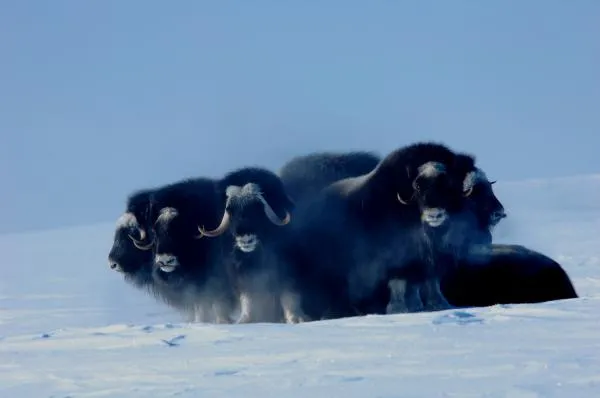
Musk oxen thrive in some areas, but are only holding stable or declining in population numbers in others locations. New research seeks to understand why.
Musk oxen the quintessential Arctic land mammals grow thick undercoats of soft fleece and shaggy overcoats in winter. The species was extinct in Alaska as recently as the 1880s but was re-introduced into Alaska's Arctic in the 1970s and today, approximately 3,500 to 4,000 musk oxen exist there.
Only 10 to 30 of the animals remain in Alaska's Arctic National Wildlife Refuge down in number from the more than 400 that lived in the refuge in the 1990s, said Joel Berger of the Wildlife Conservation Society (WCS), who is part of the research. [See images of the wildlife around the reserve .]
The work is integral to informing future conservation efforts for musk oxen and other at-risk Arctic species, and also to raise the profile of America's least known large mammal.
"People may think Pleistocene relics exist only in museums or that animals with a highly ordered social structure like elephants exist only in Africa or Asia, but actually they exist here in the American wild," Berger said. "We're just starting to unlock the clues that will inform the conservation of these amazing animals, and to spread the word about what a national treasure they truly are."
- Six Seal Species May Be Headed to Endangered List
- 8 of the World's Most Endangered Places
- 10 Species You Can Kiss Goodbye
Get the world’s most fascinating discoveries delivered straight to your inbox.
