














Sea Expedition Follows Old Tradition, New Science

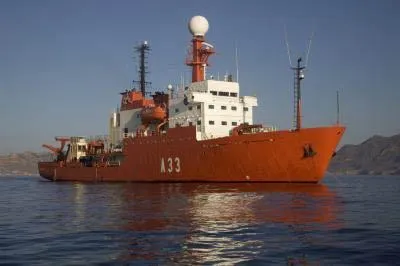
The most comprehensive expedition ever undertaken to assess the state of the planet's oceans set sail this week, on Tuesday (Dec. 15), from the Spanish port of Cadiz.
The Malaspina 2010 expedition is a multidisciplinary project led by the Spanish National Research Council (CSIC) that aims to gauge the impact of global climate change on the ocean and study marine biodiversity .
The expedition is named for Alejandro Malaspina, a frigate captain in the Spanish Navy who led the first Spanish circumnavigation of the globe more than 200 years ago, in 1789.
During the five-year voyage, researchers collected data, charted territories, recorded fauna and explored the sea. Although this new voyage is following in the centuries-old tradition, it is equipped to do thoroughly modern science.
Carlos Duarte, the captain of the Hespérides the expedition's main research vessel said the expedition will not only circumnavigate the globe, but also breathe new life into Spanish oceanography.
"It is an ambitious project on a global scale, which aims to meet two important needs: to assess the impact of global change on the ocean and explore the as yet unknown ecosystem of the deep ocean," Duarte said.
The Hespérides will be joined in January by another ship, the Sarmiento de Gamboa. Together they will spend a cumulative nine months at sea, and cover some 33,000 nautical miles (61,116 kilometers).
Get the world’s most fascinating discoveries delivered straight to your inbox.
The Hespérides will undertake the lion's share of the voyage. From Cadiz, the ship will travel to Río de Janeiro, Brazil; Cape Town, South Africa; Perth and Sydney, Australia; Auckland, New Zealand; Honolulu, Hawaii; Panama, and Cartagena de Indias, Colombia. The ship will finally return to Cartagena, Spain, in July 2011.
Almost 400 researchers are taking part in the project, from such institutions as NASA, the European Space Agency, and the Universities of California, Río de Janeiro, Washington and Vienna.
During the voyage, scientists will measure temperature, salinity (salt content) and nutrient concentration in various regions, and investigate the influence of chemical substances on the ocean and their possible toxicity.
In addition, they will study the exchange of gases between the ocean and the atmosphere, with an eye toward determining the fate of carbon dioxide absorbed by the sea.
The expedition will also explore the diversity and metabolism of phytoplankton and zooplankton and the micro-organisms of the sea's depths .
In all, the team will perform tests at 350 points and collect more than 70,000 samples of air, water and plankton, from the sea surface to depths of 16,400 feet (5,000 meters).
- Infographic: Tallest Mountain to Deepest Ocean Trench
- Image Gallery: Creatures from the Census of Marine Life
- In Images: Expedition to the Great Barrier Reef
