














Russia's Korean Pine Logging Ban to Help Save Siberian Tigers

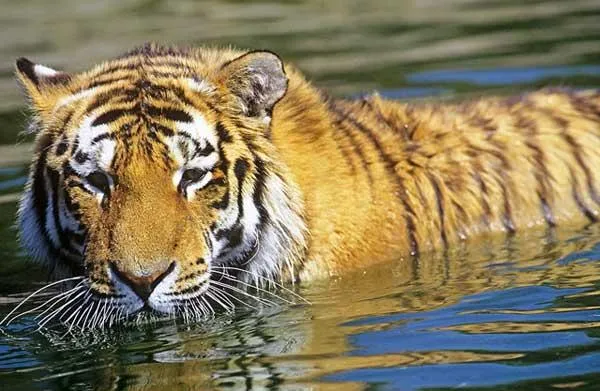
The Russian government has added Korean pine to its list of trees that are off-limits to timber companies, a move hailed by conservation groups trying to save the planet's dwindling wild tiger population.
Korean pines are a favored food for wild boar, which are key prey for the few Siberian tigers that remain in the Russian Far East.
According to recent estimates, fewer than 500 Siberian, or Amur, tigers -- the largest of the tiger subspecies -- still survive in the wild, eking out an existence in southeastern Russia and northern China.
Korean pines were nearly wiped out in Russia after the government lifted bans on logging in 2007.
With limits gone, timber companies rushed into Russian pine forests for a frenzy of felling and subsequently, 2009 saw the largest ever export of Korean pines from the country, according to WWF, an international conservation group.
"Today, Korean pine forests are in the worst condition in recent history," said Denis Smirnov, head of the Forest Program of WWF-Russia's Amur branch.
Smirnov said that, given the extreme depletion of the forests, a partial logging ban would not have been enough.
Get the world’s most fascinating discoveries delivered straight to your inbox.
Widely announced plans of the regional forest departments and forestries to voluntarily reduce pine logging turned out to be empty promises made to divert the public and government attention from the problem, Smirnov said. In this situation, the only adequate decision was to introduce a full ban on Korean pine logging, and we have been insisting on it for three-and-a-half years.
The ban was announced just days ahead of the world's first ever Tiger Summit , hosted by Russian Prime Minister Vladimir Putin in St. Petersburg.
The meeting, which concluded just last week on Nov. 24) led to new agreements and funding measures aimed at saving the world's wild tigers from extinction. Only roughly 3,200 wild tigers remain.
- Iconic Cats: All 9 Subspecies of Tigers
- Grim Trade in Tiger Parts Still Strong Globally, Report Finds
- In Images: The Wild Cats of Kruger National Park
