


Images: Squiggly Microbes Named for Lovecraft Monsters

Newfound Microbes

Scientists have discovered two new species of strange-looking microbes that live in the bellies of termites, and they've named the creatures Cthulhu and Cthylla.
Monstrous Inspiration

Cthulhu is a fictional creature in American author H.P. Lovecraft's pantheon of horrible monsters.
Cthulhu Loose Again!

Lovecraft described the ocean-dwelling creature as vaguely anthropomorphic, but with an octopus-like head, a face full of feelers, and a scaly, rubbery, bloated body with claws and narrow wings.

Mini-Cthulhu
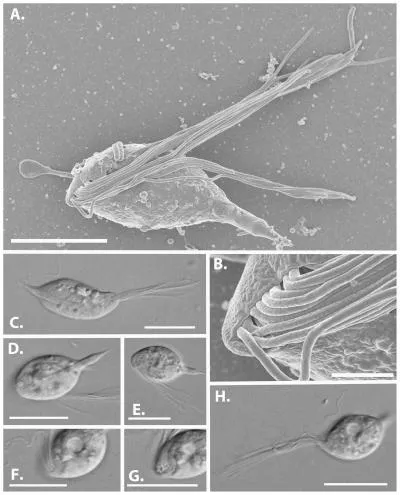
While Cthulhu macrofasciculumque isn't as frightening as Lovecraft's Cthulhu, it does look like it has a big tuft of tentacles.
Mini-Cthylla

This image shows Cthylla microfasciculumque, another new microbe species found in termite guts. With just five flagella, it's smaller than Cthulhu macrofasciculumque and is named after Cthylla, the secret daughter of Cthulhu, generally portrayed as a winged cephalopod.
Mini-Cthylla On The Move

This is a screenshot from a video clip showing how the mini-Cthylla moves. When researchers first saw these new microbe species under a microscope, they were struck by its strange movements that almost resembled an octopus swimming.
Gut Symbionts

Microbes like the mini-Cthulhu shown here help termites turn wood into digestible sugar, which is why the pests are so good at eating through walls.
Get the world’s most fascinating discoveries delivered straight to your inbox.
