













The Future of Babies: Artificial Wombs and Pregnant Grandmas

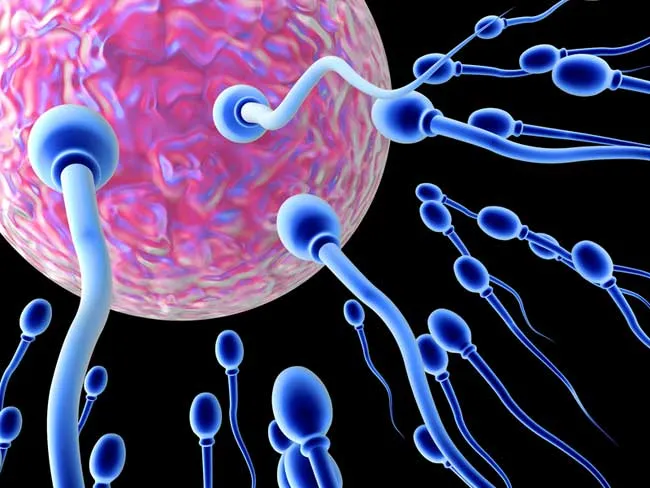
Artificial wombs and experiments on human embryos grown in the lab will be commonplace and no big deal ethically in 30 years, several scientists predict.
They envision a scenario just like test-tube babies, which shocked us 30 years ago but now are fairly routine and acceptable to most people.
That is one of many predictions about the future of assisted reproduction and other baby-related medical advances in a special news report, "Making Babies: The Next 30 Years," in the July 16 issue of the journal Nature.
Here are some of the report's other predictions:
- Newborns and 100-year-olds alike could have children. Infertility will be eradicated.
- Labs will be able to generate sperm and eggs for anybody.
- Human embryos will be made from sperm and egg cells derived from pluripotent stem cells (the kind that can develop into any of the body's cell types).
- Fetuses will freely float in artificial placentas or uteruses of fluid, with umbilical cords attached to machines.
- "Genetic cassettes" will be inserted at the embryonic stage to correct diseases such as Huntington's.
- Since embryos will be grown in labs, mutations to embryos could be corrected and improvements could be engineered. Yet there will be no "designer babies " because no single gene is that predictive of a "perfect" child.
- In vitro fertilization (IVF) will become as cheap as $100 and available for women in developing countries and those who are socially shunned or harmed because they are infertile.
Even if there is widespread availability of IVF, it is unclear if people will choose it over the conventional approach — sex, said Susannah Baruch, director of reproductive genetics at the Genetics and Public Policy Center at Johns Hopkins University in Washington D.C.
"The old-fashioned way is cheaper and more fun and that won't change in 30 years," she told Nature.
Other experts interviewed by Helen Pearson for the report include Davor Solter, developmental biologist at the Institute of Medical Biology in Singapore, Alan Trounson, an IVF pioneer and director of the California Institute for Regenerative Medicine, Alastair Sutcliffe, a pediatrician who studies the health of children after IVF at University College London, Scott Gelfand, director of the Ethics Center at Oklahoma State University, Miodrag Stojkovic, stem-cell biologist at the Prince Philip Centre of Investigation in Spain, Zev Rosenwaks, director of the Center for Reproductive Medicine and Infertility in New York, and Regine Sitruk-Ware, reproductive endocrinologist and executive director of research and development at the Population Council in New York.
Get the world’s most fascinating discoveries delivered straight to your inbox.
- Video: A Mother's Touch
- The Future and History of Birth Control
- The Sex Quiz
