
 Live Science Plus



40 Seafloor Gas Seeps Found Off US East Coast

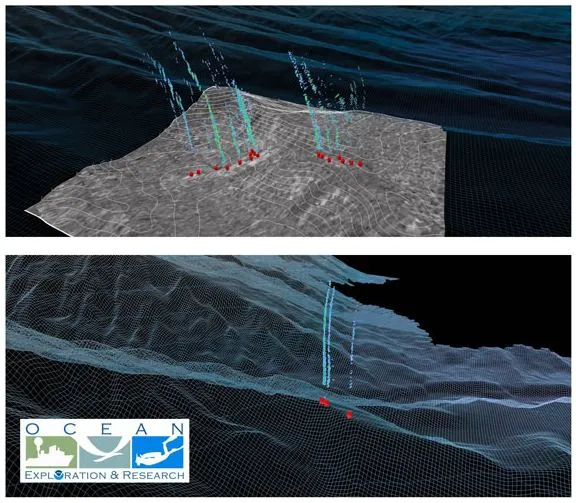
A research cruise has discovered 40 previously unknown gas seeps on the seafloor off the U.S. East Coast. The plumes of gas are almost certainly methane, also known as natural gas, according to government scientists.
Methane is a potent greenhouse gas due to its ability to absorb heat, but the released gas is not likely to reach the ocean surface in significant quantities and affect the climate, said Carolyn Ruppel, a researcher with the U.S. Geological Survey, which collaborated in the research. Neither is the amount of gas likely to warrant commercial interest, she said.

Methane seeps are important to find and study since they involve the transfer of carbon from the ground to the atmosphere, which is important for getting an accurate picture of climate change in terms of how much gas is emitted naturally and how much is emitted by humans, Ruppel told OurAmazingPlanet. Methane also can oxidize in water and contribute to ocean acidification, she said. [Video: Humans Hit the Oceans Hard]
The NOAA ship Okeanos Explorer mapped the locations between Nov. 2 and Nov. 20 using multibeam sonar, which produces detailed images of the seafloor by calculating the amount of time and distance it takes for sound waves to travel from the ship to the seafloor and back. During that time the ship and its instruments mapped 5,970 square miles (15,460 square kilometers) of seafloor, an area larger than Connecticut, according to the NOAA release. The mapping was primarily done along the continental slope, where the North American continent ends and drops into the Atlantic Ocean basin. Sound waves were also used to visualize the rising plumes of gas.
It's unclear exactly where the gas is coming from, Ruppel said. Methane either can arise from microbial activity in shallow deposits of organic material, or it can come from more deep-seated processes involving oil formation. Probably both processes are at work in these different seeps, she said.
A mere generation ago, methane seeps were virtually unheard of off the East Coast. Since the early 1980s, however, several seeps have been found. "With advanced multibeam sonar, it may become routine to discover seeps while we systematically explore our poorly known ocean," NOAA scientist Stephen Hammond said in the statement.
Reach Douglas Main at dmain@techmedianetwork.com. Follow him on Twitter @Douglas_Main. Follow OurAmazingPlanet on Twitter @OAPlanet. We're also on Facebook and Google+.
