 Live Science Plus





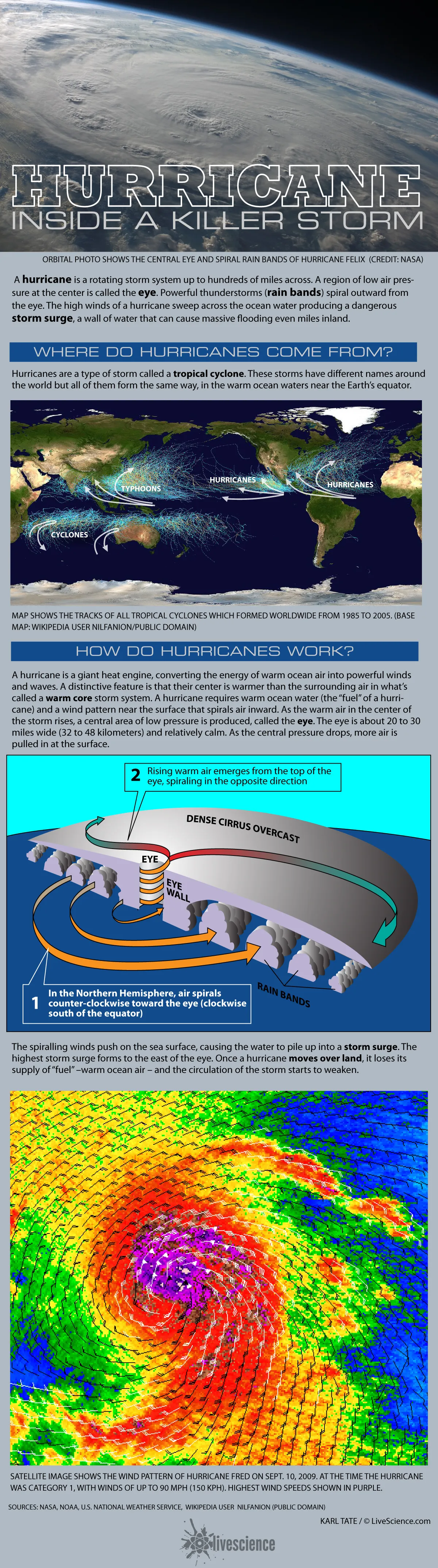
A hurricane is a rotating storm system up to hundreds of miles across. A region of low air pressure at the center is called the eye. Powerful thunderstorms (rain bands) spiral outward from the eye. The high winds of a hurricane sweep across the ocean water producing a dangerous storm surge, a wall of water that can cause massive flooding even miles inland.
Hurricanes are a type of storm called a tropical cyclone. These storms have different names around the world but all of them form the same way, in the warm ocean waters near the Earth's equator.
A hurricane is a giant heat engine, converting the energy of warm ocean air into powerful winds and waves. A distinctive feature is that their center is warmer than the surrounding air in what's called a warm core storm system. A hurricane requires warm ocean water (the "fuel" of a hurricane) and a wind pattern near the surface that spirals air inward. As the warm air in the center of the storm rises, a central area of low pressure is produced, called the eye. The eye is about 20 to 30 miles wide (32 to 48 kilometers) and relatively calm. As the central pressure drops, more air is pulled in at the surface.
Article continues belowIn the Northern Hemisphere, air spirals counter-clockwise toward the eye (clockwise south of the equator). Rising warm air emerges from the top of the eye, spiraling in the opposite direction.
The spiralling winds push on the sea surface, causing the water to pile up into a storm surge. The highest storm surge forms to the east of the eye. Once a hurricane moves over land, it loses its supply of "fuel" –warm ocean air – and the circulation of the storm starts to weaken.

