













Endangered Sea Turtle Saved from 'Pirate Fishermen'

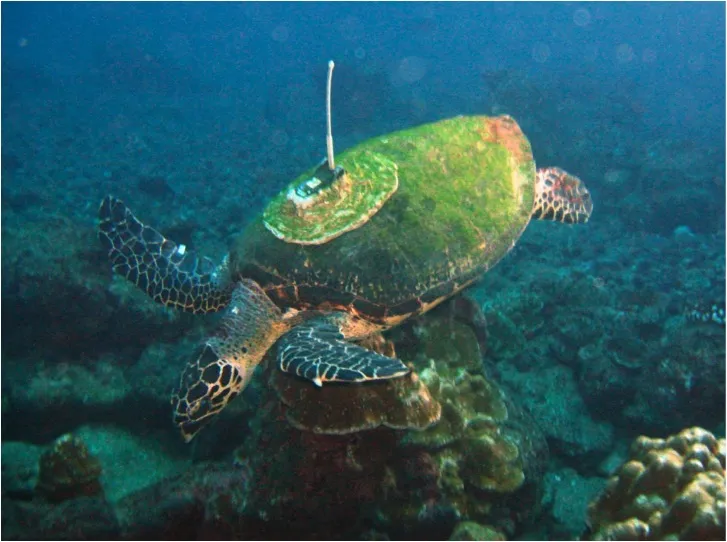
Rangers at Cocos Island, a Costa Rican national park in the Pacific Ocean, say they recently found an endangered green sea turtle hooked by fishermen in protected waters. The turtle was released alive, but injured, and conservation officials say the episode highlights the threat of illegal long-line fishing.
"Pirate fishermen are wreaking havoc on sea turtles and sharks of the Pacific, even at this remote 'protected' site, more than 350 miles from the mainland, destroying one the most incredible hotspots of marine biodiversity in the Pacific," biologist Todd Steiner, executive director of the Sea Turtle Restoration Project, said in a statement this week.
These "pirate fisherman" are often trying to catch sharks for their fins, which are shipped to Asia to make shark fin soup, a popular delicacy. When the fishermen sneak long-lines (lines that have hundreds or even thousands of baited hooks) inside the protected waters around Cocos Island, they risk unintentionally killing wildlife like turtles, whales, dolphins and seabirds, conservationists say. Park rangers at Cocos Island have accumulated a mountain of confiscated long-lining gear, Steiner said.
"When fishers are willing to risk losing many thousands of dollars of gear, it confirms this is not an isolated incident," he said.
The hooked turtle in Costa Rica was named Swift and was one of 17 turtles tagged with a satellite transmitter as part of a conservation project by the Sea Turtle Restoration Project and the Costa Rican organization Pretoma. The researchers are tracking the turtles' migrations to eventually create "protected swimways" between their feeding and nesting areas.
Cocos Island is sometimes known as Shark Island for the many scalloped hammerhead sharks, white-tipped reef sharks and whale sharks that lurk in its tropical waters. The protected marine area around the island was made bigger last year, expanding by five times what was already a no-fishing zone.
Besides endangered green turtles, the waters around Cocos Island also support leatherback turtles, which are listed as critically endangered on the IUCN Red List of Threatened Species. The Costa Rican population of leatherback turtles has declined by 40 percent in the last eight to 10 years, and 90 percent in the past 20 years, according to conservationists.
Get the world’s most fascinating discoveries delivered straight to your inbox.
Follow LiveScience on Twitter @livescience. We're also on Facebook & Google+.
