














Turtles Find Safe Haven in Protected Oceans

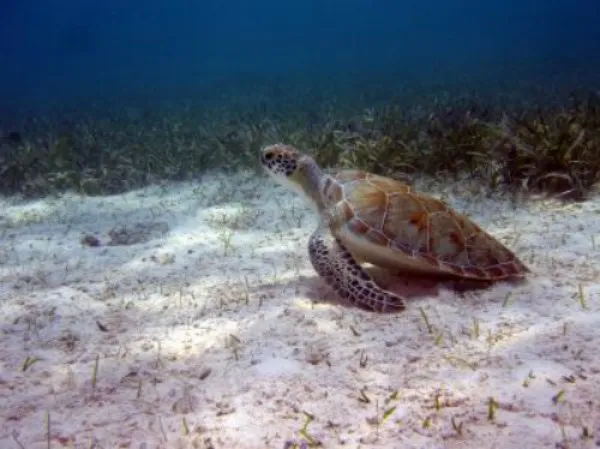
Green turtles appear to find a benefit in heading to Marine Protected Areas over nonprotected areas of the ocean at mealtime, a new study finds.
Researchers say the find provides compelling evidence that making key swaths of the ocean off-limits for fishing and other ecological disruptions is proving a successful strategy for protecting marine animals.
Scientists tracked 145 green turtles from 28 different nesting sites as the marine reptiles traveled across thousands of miles across the ocean to their chosen feeding grounds. The team was able to follow the animals' movements with the help of satellite-tracking tags affixed to the turtles.
They found that 35 percent of the turtles chose Marine Protected Areas for foraging — more than would happen by random choice.
"Our global overview revealed that sea turtles appear in Marine Protected Areas far more than would be expected by chance," study researcher Brendan Godley of the University of Exeter's Center for Ecology and Conservation in England, said in a statement.
Green turtles, like many other marine turtle species, are facing grave threats. The International Union for the Conservation of Nature, an independent scientific body that assesses the status of species around the world, has listed green turtles as an endangered species since 2004, and reports that their numbers are continuing to decline.
The number of females laying eggs has declined by as much as 67 percent at some nesting sites.
Get the world’s most fascinating discoveries delivered straight to your inbox.
Leatherback turtles, the largest turtles on Earth, have largely disappeared from areas of the Pacific Ocean where they were once abundant.
There has been debate about the role of Marine Protected Areas in saving turtles and other threatened marine animals, yet the recent research indicates that protected oceans can provide a safe place to eat and forage for vulnerable creatures, Godley said.
Follow OurAmazingPlanet for the latest in Earth science and exploration news on Twitter @OAPlanet and on Facebook.
