













Light-Trapping Bug Acts Like Plant

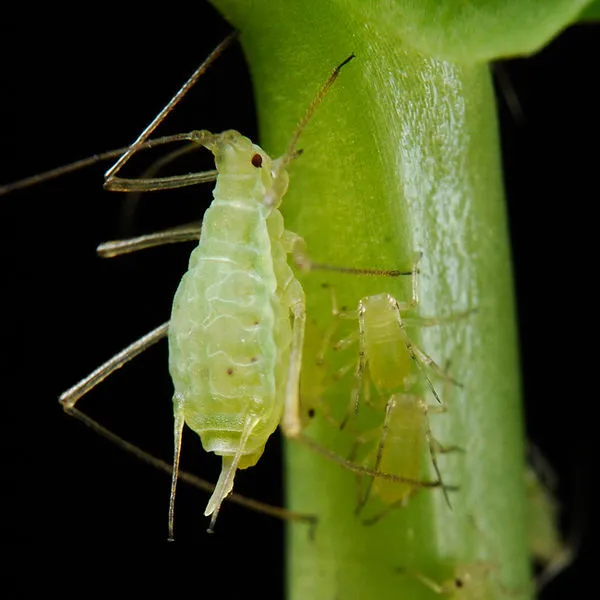
A tiny insect called the pea aphid might be one of the only animals to turn sunlight into energy like a plant.
Scientists say they've found evidence suggesting that the insect (Acyrthosiphon pisum) traps light to produce adenosine triphosphate, or ATP, the cellular energy currency that powers biochemical reactions. (For animals, cells typically convert energy from food into ATP, while plants make ATP via photosynthesis.)
Aphids are already remarkable in the animal world, because they produce their own carotenoids, pigments usually produced by plants, fungi and microorganisms that can act as antioxidants when consumed by humans. Previous research found that aphids got this pigment-producing power after swapping genes with fungi, and now the new study suggests these carotenoids might be behind the aphid's apparent photosynthesis-like abilities.
Carotenoids contribute to pea aphids' body color, and a French research team from the Sophia Agrobiotech Institute found that the bugs' carotenoid production — and thus, color — varied depending on environmental conditions. Aphids in the cold produced high levels of carotenoids and were green, while optimal conditions resulted in orange aphids that made intermediate levels of carotenoids, and white aphids with almost no pigment appeared in large populations faced with limited resources.
When researchers measured the ATP levels in the three groups of aphids, they found that the green ones made significantly more ATP than white aphids. What's more, orange aphids produced more ATP when exposed to sunlight than when moved into the dark, according to the study results detailed this month in the journal Scientific Reports. The researchers also crushed the orange aphids and purified their carotenoids to show that these extracts could absorb light and create energy.
The team said further investigation was needed to confirm their results and answer why these sap-sucking animals would need to make energy from sunlight.
A few years ago, researchers reported that a green sea slug was the first animal discovered to produce chlorophyll, the primary pigment plants use to capture sunlight, after stealing genes from algae that they ate. Scientists found that these slugs could survive on sunlight, converting it into energy like plants do and eliminating the need for food.
Get the world’s most fascinating discoveries delivered straight to your inbox.
Follow LiveScience on Twitter @livescience. We're also on Facebook & Google+.
