













Toddlers Show Less Sympathy for Whiners

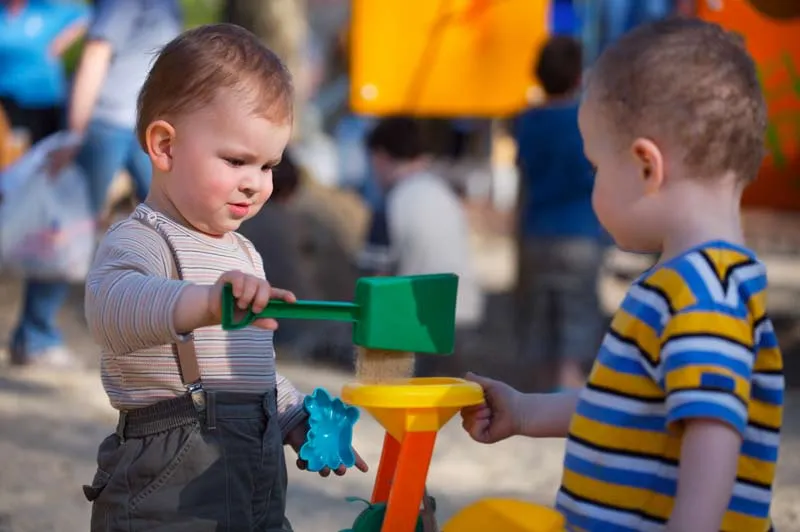
Toddlers seem to know the difference between a whiner and somebody who is justifiably upset, and the young children often show less sympathy for crybabies, a new study shows.
For the research, scientists at the Max Planck Institute for Evolutionary Anthropology in Leipzig, Germany, studied 24 girls and 24 boys, ages 36 months to 39 months, as they each interacted with two adults.
During the interactions, one of the adults would show he was upset by frowning, whimpering or pouting. In each case, the adult was either reacting to something that would cause reasonable distress or overreacting to something much less serious.
These situations included one adult dropping a toy-box lid on another adult's hand (causing justified distress) or one adult getting his sleeve caught on the toy-box lid (causing an unjustified tantrum). In another pair of situations, one adult found extra marbles and did not share them with the other adult or one adult shared six marbles equally.
The researchers found that the children showed concern for the adults who got upset over a real harm or injustice. The kids even showed some concern for those adults later when they got upset over an unknown cause, the American Psychological Association (APA) explained in a statement.
"The study provides the first evidence that 3-year-olds can evaluate just how reasonable another person's distressed reaction is to a particular incident or situation, and this influences whether they are concerned enough to try to do something to help," Max Planck Institute researcher Robert Hepach said in the APA statement.
In further tests, one adult was given one helium balloon and the child was given two. When the adult "accidentally" let go of his balloon and became upset, the toddler was quicker to offer one of his balloons to the adult if the child had witnessed that adult get justifiably upset during the previous experiment, the researchers said.
Get the world’s most fascinating discoveries delivered straight to your inbox.
"These very young children really considered what was happening in a given situation rather than automatically responding with sympathy to another person apparently in distress," Hepach said in the statement. "In most instances, they identified unfounded distress, and they responded in a manner appropriate for the specific situation."
The research was published in the APA journal Developmental Psychology.
Follow LiveScience on Twitter @livescience. We're also on Facebook & Google+.
