














North Korea Readies Long-Range Rocket for Launch Despite Warnings

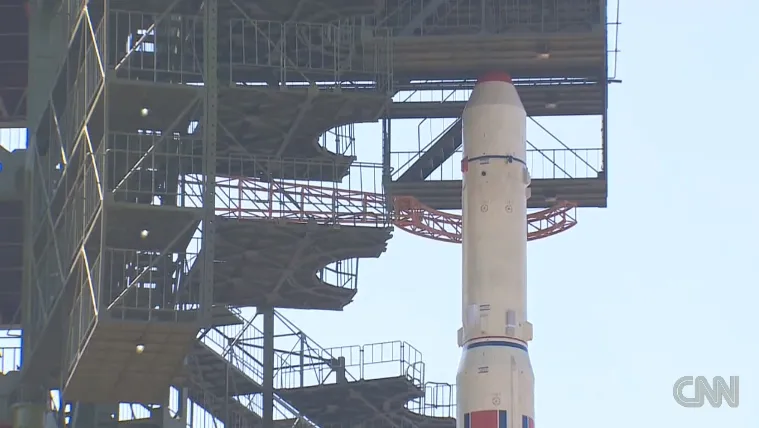
North Korea is continuing with preparations to launch a new Earth-observing satellite into space atop a long-range rocket, despite open condemnation from countries such as the United States and South Korea, according to news reports.
The North Korean rocket, called Unha-3 (Galaxy-3), is potentially days away from lifting off, according to Reuters. The rocket is scheduled to launch sometime between April 12 and April 16, to coincide with centenary celebrations of the birth of Kim Il Sung, who established North Korea in 1948.
The rocket will be carrying a satellite called Kwangmyongsong-3, which translates to Bright Shining Star-3.
Many nations have been vocal critics of the mission, claiming it is a disguise for a ballistic missile test. But North Korea has maintained that the launch is part of the nation's peaceful space program.
"The weight of our satellite is 100 kg," said Ryu Kum-chol, vice director of the space development department of the Korean Central Space Committee, according to Reuters. "If it was a weapon, a 100 kg payload wouldn't have much of an effect … Our launching tower is built on an open site."
The Unha-3 rocket is nearly 100 feet tall (30 meters), according to press reports, and will lift off from a new launch site in the village of Tongchang-ri, which is located in northwest North Korea, and is about 35 miles (50 kilometers) from the city of Dandong on the Chinese border. [Images: North Korea's Rocket and Missile Program]
"The launch of the Kwangmyongsong-3 satellite is the gift from our people to our great leader, comrade Kim Il-sung, on the occasion of his 100th birthday, so this cannot be a missile test," Ryu said.
Get the world’s most fascinating discoveries delivered straight to your inbox.
North Korea recently entered into a food aid agreement with the U.S., which requires the Asian nation to halt long-range rocket launches in exchange for critical resources to stem the country's widespread poverty and famine.
Officials from the U.S. and South Korea have said that the Unha-3 launch is a violation of this agreement, and could carry significant consequences. South Korean officials have said they may even shoot down parts of the Unha-3 rocket if they breach the state's borders.
"If North Korea goes ahead with a long-range missile launch, our government will sternly deal with this provocative act by closely coordinating with the international community," the South Korean Unification Ministry said in a statement, according to South Korea's Yonhap News Agency.
Susan Rice, the U.S. Ambassador to the United Nations, told CNN Monday (April 9) that the U.N. Security Council will likely meet if North Korea proceeds with the Unha-3 launch, Yonhap reported.
In April 2009, North Korea attempted a similar satellite launch that was widely criticized. North Korean officials said the mission succeeded, but U.S. intelligence agencies claimed the vehicle failed during ascent, which caused the rocket's second and third stages and the onboard satellite to plummet into the Pacific Ocean.
The 2009 event triggered the United Nations to tighten sanctions against North Korea.
This story was provided by SPACE.com, a sister site to LiveScience. Follow SPACE.com for the latest in space science and exploration news on Twitter @Spacedotcom and on Facebook.
