













Cancer-Causing Chemical Found in Smokeless Tobacco

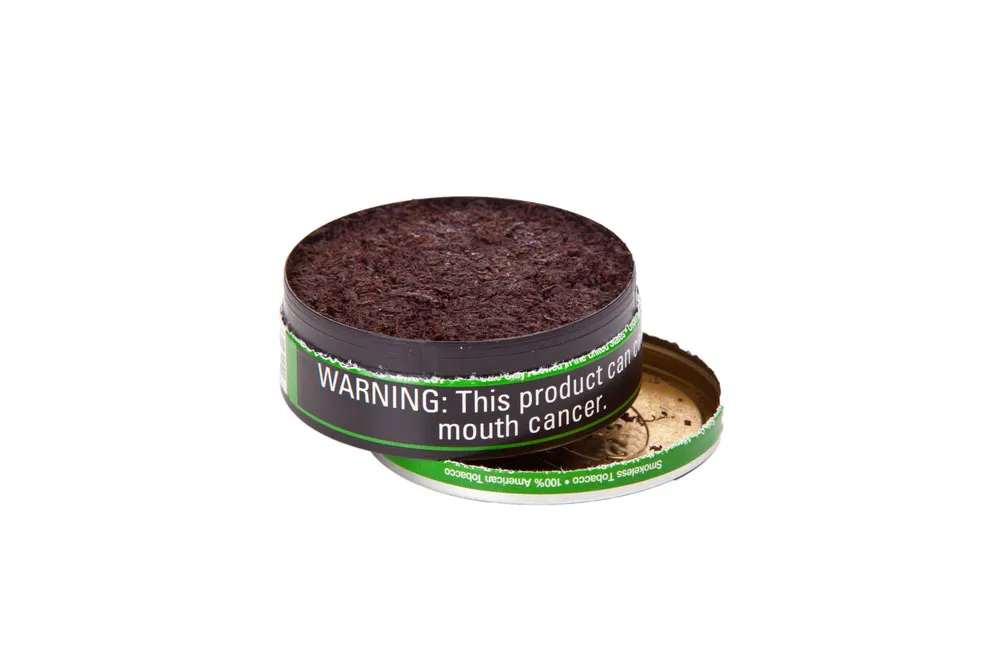
A chemical in smokeless tobacco products has been found to cause cancer, according to a new study in animals. The chemical was a strong inducer of oral tumors, the study showed.
While use of smokeless tobacco products has been strongly linked to the development of cancer, no specific chemical in the products had been identified as a strong oral-cancer causing agent until now, the researchers say.
The chemical, called (S)-N'-nitrosonornicotine, or (S)-NNN, "is the only chemical in smokeless tobacco known to cause oral cancer," study researcher Silvia Balbo, a cancer researcher at the University of Minnesota, said in a statement. The finding may explain how smokeless tobacco products cause cancer, Balbo said.
Balbo said the findings are an affirmation that tobacco products should be avoided. Smokeless tabacco products are already required to carry warning labels saying the products can cause mouth cancer or are not a safe alternative to cigarettes, the Food and Drug Administration says.
The most common type of smokeless tobacco product is moist snuff placed in the mouth.
Previous studies have suggested that a group of chemicals called nitrosamines, of which (S)-NNN is a member, cause various types of cancer in animals, but no study has looked at the carcinogenicity of (S)-NNNspecifically, the researchers say.
Balbo and colleagues administered (S)-NNN to 24 rats. The rats were given (S)-NNN or tap water. The total dose was approximately equivalent to the amount of (S)-NNN to which a smokeless tobacco user would be exposed from chronic use of these products.
Get the world’s most fascinating discoveries delivered straight to your inbox.
All 24 rats given (S)-NNN had esophageal tumors and oral tumors, and died within 17 months.
"Measures should be taken to reduce this chemical in smokeless tobacco," Balbo said.
In future studies, Balbo said she and her colleagues hope to identify other carcinogens in smokeless tobacco, and to understand what levels of these chemicals are present in smokeless tobacco products.
The study will be presented this week at the American Association for Cancer Research (AACR) meeting in Chicago.
Pass it on: A chemical in smokeless tobacco products has been found to be a strong inducer of oral cancers.
This story was provided by MyHealthNewsDaily, a sister site to LiveScience. Follow MyHealthNewsDaily staff writer on Twitter @MyHealth_MHND. Find us on Facebook.
