













How Mysterious Molecules May Help Cool the Planet

Elusive molecules in the Earth’s atmosphere may be helping to cool the planet more efficiently than scientists previously thought, a new study suggests.
They are called Criegee intermediates, or Criegee biradicals (named after the German chemist Rudolf Criegee), and are short-lived molecules that form in the Earth’s atmosphere when ozone reacts with alkenes (a family of organic compounds). While scientists have known about the intermediates for decades, they haven't been able to directly measure how the molecules react with other atmospheric compounds, such as the pollutants nitrogen dioxide and sulfur dioxide, until now.
Researchers used a new method to create Criegee intermediates in the lab, and then reacted them with several atmospheric compounds. They found that the reactions with the pollutants could produce aerosols, tiny particles that reflect solar radiation back into space, much more quickly than previously assumed.
Given that 90 percent of the alkenes in the atmosphere that produce these intermediates come from Earth's ecosystems, the results suggest that "the ecosystem is negating climate change more efficiently than we thought it was," said study co-author Carl Percival, an atmospheric chemist at the University of Manchester in the United Kingdom. "The most important message here is that we need to protect the ecosystems we have left." [Gallery: Earth's Unique Ecosystems]
Percival noted that scientists aren't close to being ready to use the intermediates in geoengineering to generate more aerosols and proactively cool Earth's climate. The main point, he said, is that we need to preserve the ecosystem so that it can naturally produce more Criegee intermediates.
Measuring the biradicals
In 1949, the chemist Criegee proposed that biradicals — reactive molecules missing two chemical bonds — could form when ozone reacts with hydrocarbons like alkenes. These biradicals would presumably play a substantial role in both removing pollutants from the lower atmosphere (a process called oxidation) and producing secondary organic aerosols (primary aerosols come from such sources as sea spray and wind-blown dust, whereas secondary aerosols form from the reactions of atmospheric gases).
Get the world’s most fascinating discoveries delivered straight to your inbox.
Though numerous theoretical studies and indirect measurements have supported the importance of the biradicals, scientists have had much difficulty taking direct measurements of biradicals reacting with key atmospheric compounds.
"The reactions are so extremely rapid that they disappear quite quickly," before scientists can take crucial measurements, Percival told LiveScience.
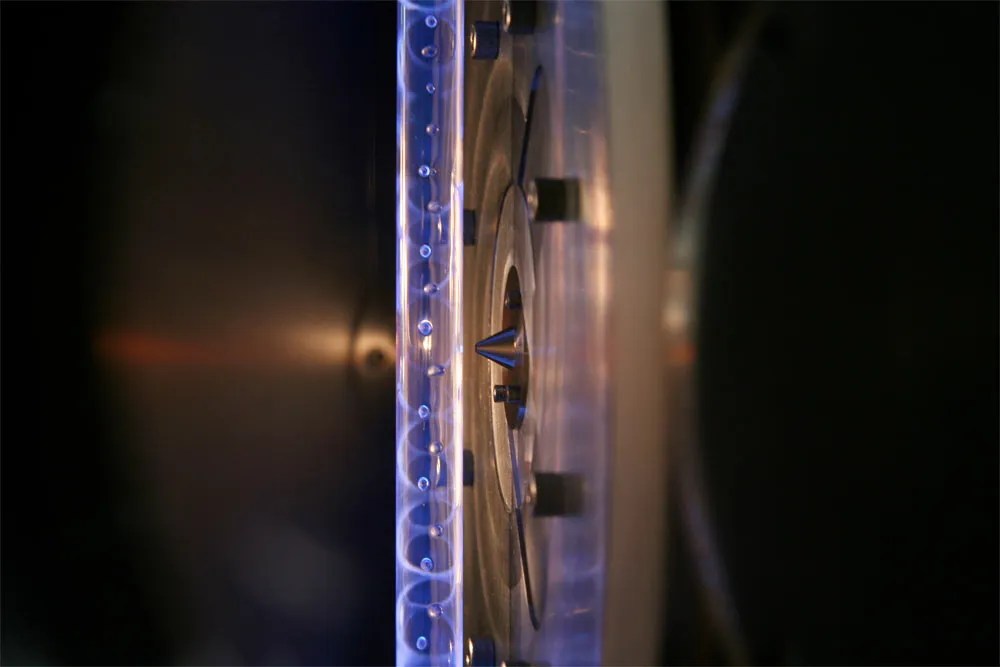
To get around this issue, Percival and his colleagues determined a new method to create the simplest Criegee intermediate, formaldehyde oxide, in the lab. They shined an intense laser light on the compound diiodomethane, breaking off two bonds and creating a biradical. They then reacted the biradical with molecular oxygen to form formaldehyde oxide.
With the Criegee intermediate in hand, the researchers added in some atmospheric pollutants — nitric dioxide, sulfuric dioxide, water or nitric oxide — and then measured the reactions with sophisticated instruments. They found that the intermediates reacted with nitric dioxide and sulfuric dioxide unexpectedly fast, showing that the intermediates are better at removing the pollutants from the atmosphere than previous studies suggested.
In the atmosphere, the resulting compounds would react further with molecules to accelerate the formation of radiation-reflecting aerosols, Percival said.
Just the beginning
George Marston, a chemist at the University of Reading in the U.K. who was not involved with the research, was surprised by the speed of the reactions. "The values aren't necessarily what you might expect," Marston told LiveScience. "But the fact is that these [intermediates] haven't been studied before, so it's difficult to know what you would really expect."
Marston, who wrote a perspective piece accompanying the study published in the Jan. 13 issue of the journal Science, said that it’s important that scientists are finally getting a handle on the reactions of the Criegee intermediates, and that the study could have profound implications for understanding atmospheric oxidation, a process that can remove pollutants from our atmosphere and could impact Earth's climate.
But, he said, scientists still have a lot of work to do. "This is very much the beginning of a much more extensive systematic study," he said.
Percival said that future studies would need to look at other Criegee intermediates and measure reactions with other atmospheric compounds at different temperatures. "This was all done at room temperature, but the atmosphere has a huge temperature variation and gets quite cold," he explained.
