
















All Female Team Trains Microbes To Clean Up Nuclear Waste
This ScienceLives article was provided to LiveScience in partnership with the National Science Foundation.
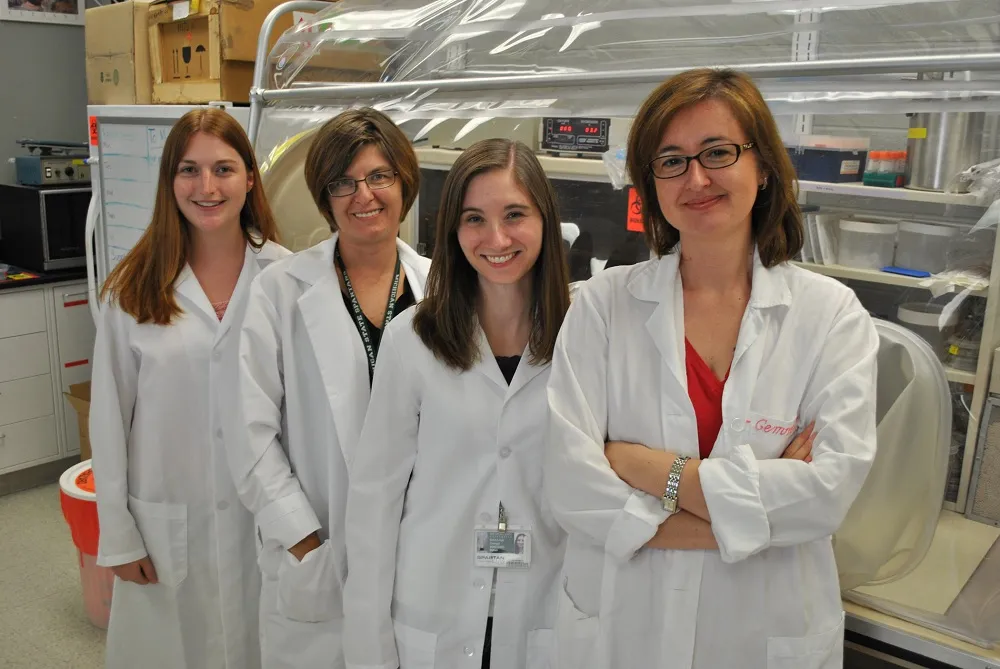
When people enter microbiologist Gemma Reguera's lab at Michigan State University, one of the first things they notice is that it's staffed nearly with all female researchers. Ever since Reguera was six years old, she knew that she wanted to be a microbiologist. Once her career began in earnest, she also knew that she wanted to be a role model for women in science. And she's been successful on both fronts.
Reguera has also succeeded in deciphering how microbes — specifically Geobacter bacteria — can play a key role in cleaning up nuclear waste and toxic metals. The revelation that Geobacter's conductive pili or nanowires do the hard job of cleanup has put Reguera's research on an interesting course. Reguera is working to improve and patent Geobacter's nanowires, which perform nature's version of electroplating with uranium (an electrochemical process used to make metallic coatings from soluble metals) which effectively immobilizes radioactive material and prevents it from leaching into groundwater.
The next phase of her efforts could lead to microbial fuel cells that generate electricity while cleaning up after environmental disasters — not a bad combination. See a video of Reguera in a recent interview conducted by the National Science Foundation answering the ScienceLives 10 Questions below.
Name: Gemma Reguera Institution: Michigan State University Field of Study: Microbigology
Editor's Note: This research was supported by the National Science Foundation (NSF), the federal agency charged with funding basic research and education across all fields of science and engineering. Any opinions, findings, and conclusions or recommendations expressed in this material are those of the author and do not necessarily reflect the views of the National Science Foundation. See the ScienceLives archive.
Get the world’s most fascinating discoveries delivered straight to your inbox.