















Global Warming Could Fuel War

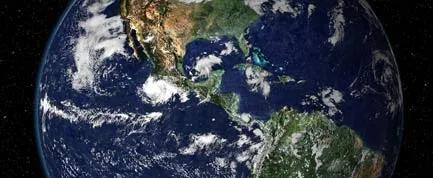
Food and water shortages fueled in the future by global warming could spur conflicts and even wars over these essential resources, the authors of a new study warn.
History suggests the controversial idea might be on track.
Changes in climate, such as temperature and rainfall, can significantly alter the availability of crops, livestock and drinking water. Resource shortages could, in turn, prompt people to turn to war to get what they need to survive, several experts have warned.
A new study, detailed in the August 2007 issue of the journal Human Ecology, suggests this was the case in the past. The authors reviewed 899 wars fought in China between 1000 and 1911 and found a correlation between the frequency of warfare and records of temperature changes.
“It was the oscillations of agricultural production brought by long-term climate change that drove China’s historical war-peace cycles,” wrote lead author David Zhang of the University of Hong Kong.
Similarly, several top retired American military leaders released a report in April warning of the national security threat posed by global warming, predicting wars over water, refugees displaced by rising sea levels and higher rates of famine and disease.
Climate change could possibly improve growing conditions in some areas (particularly higher latitudes), while hurting them in others (especially the tropics), explained William Easterling of Pennsylvania State University.
Get the world’s most fascinating discoveries delivered straight to your inbox.
“What that sets up is a sort of winners and losers situation,” said Easterling, who was not affiliated with the new study.
Easterling, a co-author of the most recent Intergovernmental Panel on Climate Change report on the potential impacts of climate change, told LiveScience that all-out war is unlikely unless international institutions and global markets completely fail, but the change in distribution of resources could cause “international tensions [to] intensify.”
As an example of these tensions, Easterling cited Israel’s control over regional water resources and its use of that monopoly in the conflict with the Palestinians.
“It became a huge political tool,” Easterling said.
Easterling also said that the correlation cited by the authors of the new study did not necessarily prove that temperature changes caused increased warfare, but that there could certainly be a relationship between the two.
Separately, other scientists have argued that a looming peak in oil production could potentially generate conflict on a global scale as industrialized nations fight over dwindling petroleum supplies in an era of soaring demand.
- Top 10 Surprising Results of Global Warming
- Timeline: The Frightening Future of Earth
- U.S. and Global Water Wars Loom

Andrea Thompson is an associate editor at Scientific American, where she covers sustainability, energy and the environment. Prior to that, she was a senior writer covering climate science at Climate Central and a reporter and editor at Live Science, where she primarily covered Earth science and the environment. She holds a graduate degree in science health and environmental reporting from New York University, as well as a bachelor of science and and masters of science in atmospheric chemistry from the Georgia Institute of Technology.