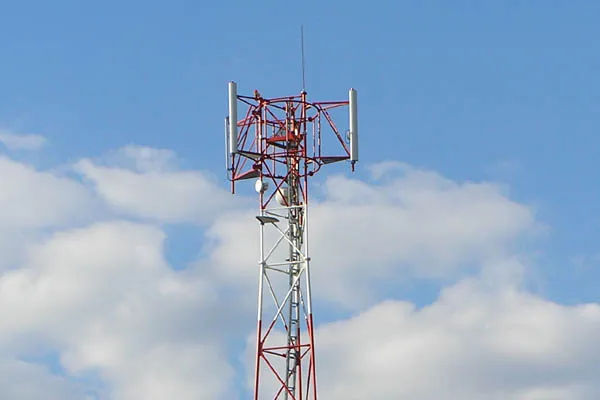
Over the past few years, dozens of people have moved to a radio-free zone in the mountains of West Virginia to escape the surrounding world of electronic gadgets that they say are making them ill. These so-called "Wi-Fi refugees" suffer from electromagnetic hypersensitivity (EHS), a condition they claim results from exposure to electromagnetic radiation emitted by cellphone towers, cellphones, Wi-Fi routers and other wireless devices.
"My face turns red, I get a headache, my vision changes and it hurts to think. Last time [I was exposed] I started getting chest pains — and to me that's becoming life-threatening," Diane Schou, an EHS sufferer who moved from Iowa to the "National Radio Quiet Zone" in West Virginia to escape EM waves, recently told the BBC. Before moving to West Virginia, she lived in a shielded cage to alleviate her symptoms. In her new Wi-Fi free home, those symptoms have all but disappeared.
While you might not feel these effects, with 5 billion cellphone subscriptions worldwide, more broadcast stations popping up every day and Wi-Fi routers seemingly everywhere, you might wonder if West Virginia's Wi-Fi refugees are early victims of a future epidemic. Though radiation from wireless devices is far below the threshold of what government regulators consider dangerous, can they really cause EHS?
Latest Videos From
According to the World Health Organization, which held a conference to assess electromagnetic hypersensitivity back in 2004, the symptoms of EHS, which include redness, tingling and burning sensations, as well as fatigue, dizziness, nausea, heart palpitations and digestive disturbances, are real and can be very severe. That said, WHO scientists don't believe this array of symptoms is actually caused by electromagnetic fields: "EHS can be a disabling problem for the affected individual … [but] there is no scientific basis to link EHS symptoms to EMF exposure," WHO states.
The vast majority of clinical trials designed to probe EHS have found that its sufferers are unable to distinguish between exposure to real and fake electromagnetic fields. Both cause them equal pain. In a 2010 meta-study that pooled the results of past trials, James Rubin, a medical psychologist at King's College London and his colleagues concluded that all the trials that found EHS patients could distinguish between real and fake EM fields were flawed: They either used unsound methodologies, or their results couldn't be replicated by identical follow-up trials.
In short, Rubin and his colleagues were "unable to find any robust evidence to support the existence of (electromagnetic hypersensitivity) as a biologic entity."
What causes EHS symptoms, then? "It is probably different things for different people," Rubin told Life's Little Mysteries. "For some, it is possible that they have some other, more conventional, illness that has been missed. So I always suggest that people affected should discuss their symptoms with their family doctor, just to check.
"For others, the 'nocebo' effect may be important. This is the reverse of the more well-known placebo effect. Basically, expecting that something will make you feel unwell can become a self-fulfilling prophecy."
WHO adds that the condition might arise from environmental factors that aren't related directly to EMF, but are related to electronics and modern technology in general: "Examples may include 'flicker' from fluorescent lights, glare and other visual problems with [visual display units], and poor ergonomic design of computer workstations. Other factors that may play a role include poor indoor air quality or stress in the workplace or living environment."
Epidemiologists aren't quite sure how many people suffer from EHS. Rubin said, "Different studies use different ways to assess it, at different points in time, and in different countries. Estimates range from 'very, very few indeed' to about 15 percent of the population, depending on who you ask."
This story was provided by Life's Little Mysteries, a sister site to LiveScience. Follow Natalie Wolchover on Twitter @nattyover. Follow Life's Little Mysteries on Twitter @llmysteries, then join us on Facebook.