













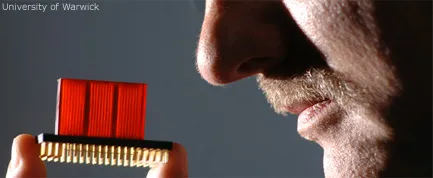
Scientists are using artificial snot to give electronic sniffers a better, and faster, sense of smell. A human nose contains more than 100 receptors working together to tease apart the molecules it encounters. This ability is further enhanced by a thin layer of mucus that, in addition to trapping particles such as pollen and dust, dissolves scents and causes some molecules to reach the odor receptors later than others. Our brain translates the time delays into a wide variety of smells. Electronic noses look nothing like a human nose and typically contain fewer than 50 sensors. Researchers at the University of Warwick and Leicester University in the United Kingdom achieved the same effect by coating an electronic nose with artificial mucus made from a mix of polymers. The man-made snot allowed their device to smell the difference between milk and a banana, something it could not do before. “Our artificial mucus not only offers improved odor discrimination for electronic noses, it also offers much shorter analysis times than conventional techniques,” said study leader Julian Gardner of the University of Warwick. The team’s device is detailed in the journal of the Proceedings of the Royal Society A. Electronic noses are often used by the food industry for quality control and some are being used to sniff out diseases.
Get the world’s most fascinating discoveries delivered straight to your inbox.