













Benign Brain Tumors Not Linked to Cell Phones

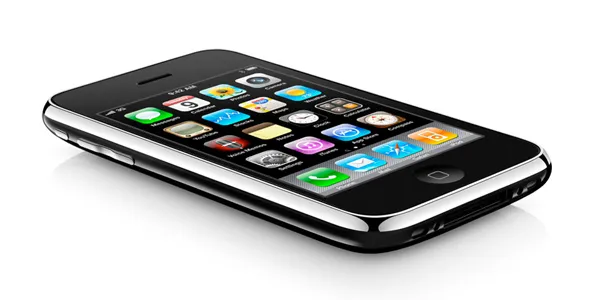
Using a cell phone for many years does not increase the risk of developing a benign type of brain tumor, a new Danish study finds.
Those in the study who used cell phones for 11 years or more were no more likely to develop these tumors, known as vestibular schwannomas, than those who used cell phones for a shorter period or not at all.
The finding of the study, which involved data from close to 2.9 million Danes, contradicts some previous studies.
The researchers also said they found no link between long-term cell phone use and the development of these brain tumors on the right side of the head, where it is supposed most people hold their cell phones.
Vestibular schwannomas originate in a part of the brain that theoretically would absorb the most energy from cell phones' electromagnetic field, the researchers said. Previous studies that had linked cell phone use to an increased risk for vestibular schwannomas contained flaws, including inaccurate reporting of past cell phone use, the researchers contended.
The findings are the latest to weigh in on the issue of the potential health risks of cell phones. In May a World Health Organization panel classified cell phones as "potentially carcinogen," citing evidence that the phones may be linked to an increased risk of brain cancer. But to date, no adverse health risks from cell phones have been established, the agency says.
In fact, researchers are gathering increasingly complete and credible evidence that cell phones do not post health risks, said Brown University's David Savitz, a professor of community health who served on the WHO panel.
Get the world’s most fascinating discoveries delivered straight to your inbox.
These latest findings provide one more piece of reassuring evidence, said Savitz, who was not involved in the Danish study. However, research should continue, he said.
Vestibular schwannomas are not cancerous, but they grow around brain cells involved in hearing and balance, according to the National Institutes of Health. As a result, they can cause hearing loss, dizziness or loss of balance. If the growths become large, they may press against critical brain regions and become life-threatening.
The Danish study is one of the biggest on this particular issue, Savitz said. Because of the national databases available in Denmark, the researchers were able to link specific cell phone subscribers with cases of this type of brain tumor.
However, the researchers took into account only how long a person had a cell phone subscription, not how often that person used his or her phone. In addition, these tumors are very slow-growing, so it's possible they could show up sometime after 11 years. Participants should continue to be monitored for the development of vestibular schwannomas, the researchers said.
Pass it on: There is no evidence that long-term cell phone use increases the risk of vestibular schwannomas, according to a new study.
This story was provided by MyHealthNewsDaily, sister site to LiveScience. Follow MyHealthNewsDaily staff writer Rachael Rettner on Twitter @RachaelRettner.

Rachael is a Live Science contributor, and was a former channel editor and senior writer for Live Science between 2010 and 2022. She has a master's degree in journalism from New York University's Science, Health and Environmental Reporting Program. She also holds a B.S. in molecular biology and an M.S. in biology from the University of California, San Diego. Her work has appeared in Scienceline, The Washington Post and Scientific American.