













New Study: The Brain is Chaotic

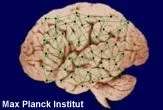
The inner workings of the brain aren't as organized as once thought. According to a new study, it's mayhem up there.
It's long been believed that information is passed on from one neuron to another at junctions where two neurons, or a neuron and a muscle, meet. Neurons are nervous system cells that process and relay information.
At the junction of two neurons, also known as a synapse, one neuron releases a chemical messenger--neurotransmitter--to excite the other neuron. This is done by diffusing the neurotransmitter to the branches (dendrites) of the transmitting neuron.
The new study purports that neurons don't just release these chemicals at synapses but along the entire span of their extensions, all the while exciting neighboring cells.
Researchers studied white matter in the brains of rats. White matter makes up the solid components of the brain that bridge the right and left hemispheres.? This part of the brain is responsible for transmitting information because it's mainly composed of nerve fibers that conduct electrical impulses.
Because there are no synapses in the white matter, "it is not a place where we would expect to see the release of messengers," said Dirk Dietrich, a study scientist from Bonn University.
However, when electrical impulses were sent through the transmission lines of a neuron--known as axons--the resulting neurotransmitter, glutamate, didn't just end up being released at the synapse.
Get the world’s most fascinating discoveries delivered straight to your inbox.
"On their way though the gray matter the axons probably release glutamate at other points apart from the synapses," Dietrich said. "Nerve cells and dendrites are closely packed together here. So the axon could not only excite the actual receptor but also numerous other nerve cells."
The findings, to be published in a forthcoming issue of the journal Nature Neuroscience, could fundamentally change the notions that the brain follows a specific ordered circuit and could have implications in medicine and therapeutic drug options.
- Top 10 Mysteries of the Mind
- Body Quiz 1: The Parts List
- Vote Now: The Greatest Modern Minds
- World Trivia: Challenge your Brain
- All About the Mind
