













Small Creatures Will Be Oil Spill's Biggest Victims
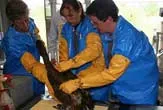
Over the last two months, the BP oil leak has unleashed all manner of havoc on the ecosystem in the Gulf of Mexico. But while sad pictures of large-eyed, oil coated birds make these animals the most visible victims of the oil leak, smaller ocean creatures will bear the brunt of the damage, scientists say.
"The greatest threat is to the whole food chain, and the base of the food chain, said John Caruso, an ecology and evolutionary biology professor at Tulane University. "People see the big impressive animals like pelicans and the other sea birds. It's a devastating sight, it tears you up when you see those poor birds covered in oil, but the real damage to our coastal ecosystem here will come from destruction of the cord grasses."
In particular, the cord and Spartina grasses that grow on the coast of Louisiana are crucial to the ecosystem and especially sensitive to the oil leak, Caruso said. These grasses form the foundation of the local food chain, and their root systems lessen the erosion of the small islands that protect inland Louisiana from hurricanes, Caruso said.
The oil kills the grass both with its poisonous chemicals and by simply coating the plants, which suffocates them, Caruso said. And the death of that grass has profound consequences for the rest of the wildlife in the Gulf of Mexico, Caruso said.
Similarly, the massive die-off of the tiny plants and animals called plankton will also profoundly weaken the local ecosystem.
"If you affect those communities in any way, you affect the entire food chain. If the phytoplankton and zooplankton are killed, it's curtains," Caruso told LiveScience.
The timing of the leak has increased the magnitude of the spill's effects on plankton, Caruso said. During the spring and early summer, plankton and other organisms at the base of the food chain reproduce in the shallow water on the Gulf of Mexico. The newborn critters that result are particularly vulnerable to the oil, Caruso said.
Get the world’s most fascinating discoveries delivered straight to your inbox.
As for vertebrates like birds and sharks, the major consequences of the oil leak will occur later, said Caruso. Even though birds coated in oil will die, or face difficulty after cleaning, the degradation of the food chain will cause larger problems for these animals over a longer span of time, Caruso said.
- Could the Oil Leak Stop on Its Own, and When?
- The Worst Petroleum Disasters Ever
- Gulf Oil Spill: Animals at Risk