













Earthquake Aftershocks Not What They Seemed

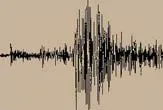
Aftershocks are more common than primary earthquakes, but researchers know little about how the two are related. They have long assumed that a main quake reconfigures stress on a fault, leading to subsequent tremblings that have roughly the same origin.
But a new study finds some aftershocks are triggered primarily by the main shock's seismic waves and that relatively small events can trigger aftershocks that are centered dozens of miles away.
"No one expected small earthquakes to trigger aftershocks at these distances," said Karen Felzer of the U.S. Geological Survey, who did the study with Emily Brodsky from the University of California, Santa Cruz.
"The traditional idea is that the aftershock zone is one to two times the length of the fault rupture, so for earthquakes of this size you wouldn't expect to see aftershocks beyond more than one kilometer [0.62 miles]," Felzer said. "We're seeing aftershocks all the way out to 50 kilometers."
The research could lead to more accurate predictions of aftershocks.
When two chunks of Earth's surface grind together, eventually enough stress builds that the junction snaps, causing an earthquake. Scientists have learned that with some margin of error, they can predict one or more aftershocks will occur, often within a day or two. Sometimes aftershocks come in flurries.
The new study looked at temblors in Southern California ranging from magnitude 2 to 6. The results are detailed in the June 8 issue of the journal Nature.
Get the world’s most fascinating discoveries delivered straight to your inbox.
The scientists found that the frequency of aftershocks declines with the distance from the main event in the same manner as the intensity of the main quake's seismic waves decreases. That suggests the dynamic forces of the shaking are at work, rather than just the static stresses that build gradually along the fault.
"The problem is that it's not clear how shaking can trigger an aftershock that doesn't happen right away, but happens a day or two after the earthquake," Brodsky said. "That's why most seismologists have thought that aftershocks are triggered by static stress resulting from the movement of the crust."
"This comes as something of a surprise," said Ian Main, a researcher at the University of Edinburgh who was not involved in the study.
In an analysis of the study for the journal, Main said it shows that dynamic forces are responsible for at least some aftershocks from small- to medium-sized quakes. "Further work is required to pin down the exact mechanisms at work," Main writes.

Robert is an independent health and science journalist and writer based in Phoenix, Arizona. He is a former editor-in-chief of Live Science with over 20 years of experience as a reporter and editor. He has worked on websites such as Space.com and Tom's Guide, and is a contributor on Medium, covering how we age and how to optimize the mind and body through time. He has a journalism degree from Humboldt State University in California.