
These Behind the Scenes articles were provided to LiveScience in partnership with the National Science Foundation.

-
 Search is on for Hot Young Stars
An astronomer uses gamma ray bursts to shine a light on outer space.
astronomy -
 5 Ways to Talk to Your Kids About Bullying
High school bullying, whether it is an online spat or ostracism in the lunchroom, is fairly common. But despite its prevalence, bullying can be difficult to discuss.
human-behavior -
 Modern Worldwide Danger Blooms from Ancient Bacteria
Opinion Research results will have implications for many other lakes in the U.S. and around the world that are also experiencing toxic blooms.
Opinion -
 Engineering a Better Food Bank
Opinion Fairly and efficiently distributing food is a large and complicated problem and a team of engineers set out to make it work better.
Opinion -
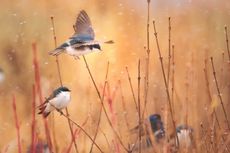 Swallows Of The Western Skies
An international team of researchers studies one slim bird to answer some big biological questions.
americas -
 Innovative Entertainment Model Designed to Get Kids Outside
The new online production, Plum Landing, teaches kids core science concepts and gets them exploring their worlds through online webisodes, games, an app, videos and hands-on activities.
technology -
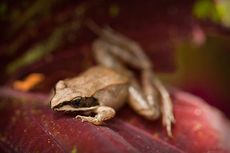 Frog Population Decline Linked to Killer Pathogen
Ranavirus may be partly to blame for dwindling frog populations.
amphibians -
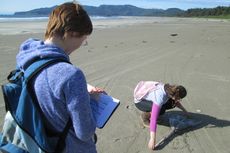 Citizen Science Aims to Clean Up Pacific Plastics
COASST studies seasonal patterns of ocean debris to aid in the clean up of the Great Pacific Garbage Patch.
rivers-oceans -
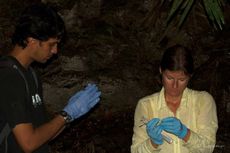 Predicting How Biodiversity Affects Disease
With the increase of cross-species disease it is important to understand how disease, species-interactions and biodiversity interact.
animals


