













'Hellboy' Taps Into Ancient Irish Folklore

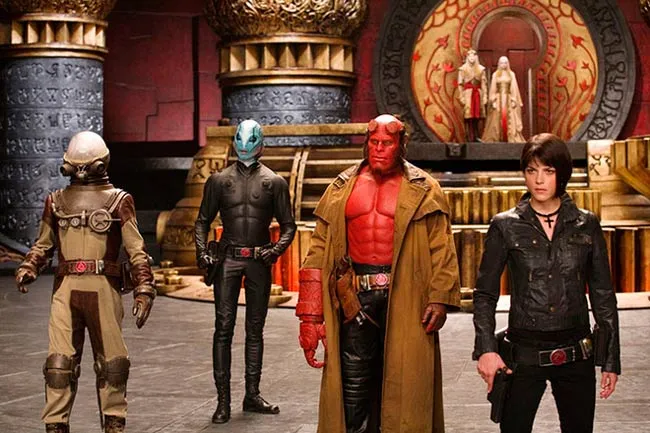
When "Hellboy II: The Golden Army" hits the big screen on July 11, it won't just be comic book aficionados salivating over the lush, fantasy-world storyline.
Fans of Celtic mythology, too, will recognize the name of the film's principle villain, Prince Nuada, a character loosely modeled after an important figure in the ancient folklore of Ireland. The film is peppered with other references to the myths of the Celtic tribes, who lived on the Emerald Isle beginning in 700 B.C.
The story behind Celtic mythology and the whimsical tales themselves would make for several interesting movies in their own right.
Celts baffled by stone henges
The Celts of Ireland arrived from Europe in successive waves for several hundred years beginning around 700 B.C. They were a warfaring but sophisticated group of people that worked iron, herded sheep and had a rich culture that included oral tradition.
By the time the Celts hit the Irish shore, the island had been inhabited for more than 5,000 years by Neolithic tribes known for building large stone structures such as megalithic tombs and ceremonial outcroppings called henges (Stonehenge, in England, is a famous example).
Knowing very little about their new home to start with, the Celts were likely baffled by the foreign-looking structures they found and developed elaborate myths to explain the island's past, historians believe. The stories, filled with tales of supernatural creatures and magical tribes, were passed down from generation to generation until Christian scribes arrived in the 6th century to write them down.
Get the world’s most fascinating discoveries delivered straight to your inbox.
Ireland invaded by seven tribes
The first "cycle" of Celtic legends – historians have divided the thousands of snippets into four cycles to keep them straight – concerns the invasion and ruling of Ireland by seven mythological tribes. The seven tribes, some good and some evil, were described in the "Book of Invasions," written in the 11th century from a patchwork of older sources and oral histories.
It is in the "Book of Invasions" where Hellboy's Prince Nuada appears, as part of the divine Thuatha De Danann tribe.
According to the myths, the Fir Bolg (or "Men of the Bags") was the fifth of seven ancient races to rule Ireland. The isle flourished under the Fir Bolg, who ruled an efficient kingdom and were thought to be immune from disease. Their 37 prosperous years of rule were ended, however, by the arrival of the Thuatha de Danann, a semi-divine race who came to Ireland by flying ship and could perform powerful magic.
The Thuatha de Danann were led into Ireland by Nuada – in the classic myths, he's actually referred to as king – and defeated the Fir Bolg in an epic battle. Nuada loses a hand during the fight that he replaces with a prosthetic made of silver, alluded to in the movie in the character's full name, Prince Nuada, Silver Lance.
Celts probably descend from Spanish
It's in the coming of the next invaders where fact and fiction start to overlap.
The seventh tribe to invade Ireland, according to the Book of Invasions, was a human race called the Milesians that came from northern Spain. The Milesians sent the Thuatha de Danann into exile and ultimately became the ancestors of every human who ever lived on the island, which they named Eire.
Interestingly, the final wave of Celts to arrive in Ireland sailed from northern Spain, say historians, and recent DNA testing has suggested that many Celts throughout the British Isles are descendent from the Spanish.
Like all Celtic mythology, it's likely that a small part of the Book of Invasions is based on historical fact, embellished by time and successive tellings over the dinner fire, historians believe.
- Quiz: Know Your Celtic Myths
- Beasts and Dragons: How Reality Made Myth
- Urban Legends Debunked
