This ScienceLives article was provided to LiveScience in partnership with the National Science Foundation.
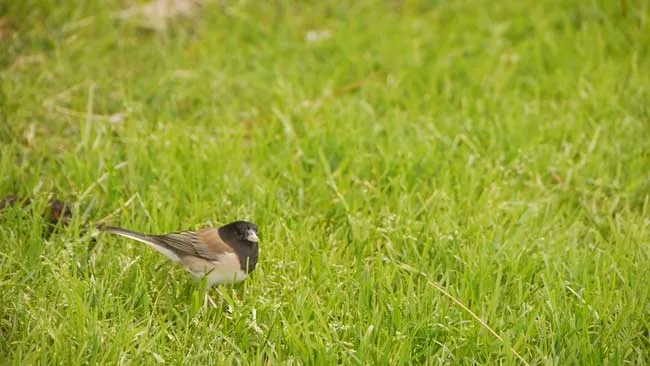
Do birds recognize each other by scent? Danielle Whittaker, a postdoctoral fellow at Indiana University Bloomington, is examining variations in the natural, airborne compounds secreted into the preening oils of juncos, a type of bird. To separate and identify those airborne compounds, Whittaker has been using gas chromatography-mass spectrometry, an ideal technology for the job. In collaboration with IU Bloomington biologist Ellen Ketterson, and Helena Soini and Milos Novotny of IU's Institute for Pheromone Research, Whittaker has learned that the concentration of airborne compounds in preen oil increases dramatically when birds are in breeding condition, suggesting these compounds may be important to reproduction. Whittaker and her colleagues have also found variation in the character of preen oils when comparing males to females, birds from two different populations, and even among individual birds of the same population. If juncos can sense all of these airborne compounds, it could mean juncos can recognize one another by scent alone. The discoveries Whittaker is making are helping to upend the long-held notion that smell plays little role in the lives of birds — juncos included. Whittaker is also looking at whether birds can recognize one another based on gene differences within the major histocompatibility complex. For more about Whittaker's research, see: Could Smell Play a Role in the Origin of a New Bird Species and Testosterone turns male juncos into blustery hunks -- and bad dads. For more on Whittaker, see her answers to the ScienceLives 10 Questions below.
Name: Danielle J. Whittaker Age: 36 Institution: Indiana University Bloomington Field of Study: Animal behavior in response to pheromones and other chemosignals
Latest Videos From
What inspired you to choose this field of study? I have always been interested in how and why we choose long-term or lifelong partners. Studying mate choice in a (mostly) monogamous species, like songbirds, gives us great insight into that question. Of course, referring to your genetic compatibility with your husband can really ruin a romantic moment, so I have to be careful.
What is the best piece of advice you have ever received? Don't take rejection personally, and don't compare yourself to other people. Rejection happens to everyone, even if you don't know about it.
What was your first scientific experiment as a child? I don't think I was very scientifically-minded as a child. I guess, like most kids, my experiments were about how much I could get away with without getting in trouble!
What is your favorite thing about being a researcher? I love being able to learn new things all the time, and the ability to follow questions wherever they lead me.
What is the most important characteristic a researcher must demonstrate in order to be an effective researcher? Perseverance is definitely key, because almost nothing works the first (or second, or third!) time you try it. But you also need to be willing to occasionally try things that no one thinks will work.
What are the societal benefits of your research? Any research that keeps us thinking about the lives of wild animals is important for inspiring us all to conserve wildlife and natural resources.
Who has had the most influence on your thinking as a researcher? Oddly enough, I think it would have to be my high school English teacher, Miss Carolyn Ball. Until my senior year of college, I wanted to be a literary scholar, and I think that training in literary analysis is what taught me to look for deeper meaning and beyond the obvious in all things.
What about your field or being a researcher do you think would surprise people the most? How unglamorous and boring it can be on a day-to-day basis! A lot of careful repetition is necessary for good science, but it's worth it.
If you could rescue only one thing from your burning office or lab, what would it be? I was going to say my computer, but like any smart person, all my work is backed up online. So it would have to be the gibbon fecal samples I collected during my dissertation fieldwork in the Mentawai Islands of Indonesia. It may sound strange to say I would rescue a bag of poop, but a lot of blood, sweat, tears, and money went into getting those samples!
What music do you play most often in your lab or car? I like energetic, angry female singers like Pink and Kelly Clarkson. But when I'm writing, I have to listen to classical music so I don't get distracted.
Editor's Note: This research was supported by the National Science Foundation (NSF), the federal agency charged with funding basic research and education across all fields of science and engineering. Any opinions, findings, and conclusions or recommendations expressed in this material are those of the author and do not necessarily reflect the views of the National Science Foundation. See the ScienceLives archive.

 Live Science Plus