













Same Sex Couples Common in the Wild

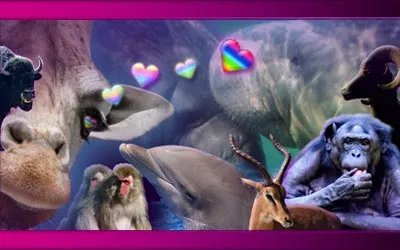
As gay couples celebrate their newfound right to marry in California and opposition groups rally to fight the ruling, many struggle with this question: Is homosexuality natural?
On this issue, Nature has spoken: Same-sex lovin' is common in hundreds of species, scientists say.
Roy and Silo, two male chinstrap penguins at New York's Central Park Zoo, were a couple for about six years, during which they nurtured a fertilized egg together (given to them by a zookeeper) and raised the young chick that hatched.
According to University of Oslo zoologist Petter Böckman, about 1,500 animal species are known to practice same-sex coupling, including bears, gorillas, flamingos, owls, salmon and many others.
If homosexuality is natural in the animal kingdom, then there is the question of why evolution hasn't eliminated this trait from the gene pool, since it doesn’t lead to reproduction.
It may simply be for pleasure.
"Not every sexual act has a reproductive function," said Janet Mann, a biologist at Georgetown University who studies dolphins (homosexual behavior is very common in these marine mammals). "That's true of humans and non-humans."
Get the world’s most fascinating discoveries delivered straight to your inbox.
Some scientists have proposed that being gay may serve its own evolutionary purpose.
"It could be a way that you strengthen bonds — that's one hypothesis," Mann told LiveScience. "Another is that it could be practice for heterosexual sex. Bottlenose dolphin calves mount each other a lot. That might benefit them later on."
Marlene Zuk, a biologist at the University of California, Riverside, suggested that gay individuals contribute to the gene pool of their community by nurturing their relatives’ young without diverting resources by having their own offspring.
One thing that does seem to be exclusive to humans is homophobia.
"It's a very interesting question as to why anybody ever cares," Mann said. "There are different theories about why people find it threatening. Some think it disrupts male bonds, like you're not playing for the right team. The funny thing is that people say homosexuality is unnatural, that non-humans don't engage in homosexual behavior, but that's not true. Then they'll say it's base and animalistic."
Humans' resistance to the idea of homosexuality extends even to research on the behavior in animals. Scientists who study the topic are often accused of trying to forward an agenda, and their work can come under greater scrutiny than that of their colleagues who study other topics, Mann said
"It's kind of a shame because I think that probably is a reason why people don't look at it more," Mann said. "That's probably why we haven't gotten further. You would think we'd know more than we do by now."
- Top 10 Gay Animals: Alternate Lifestyles in the Wild
- Sex Quiz: Myths, Taboos and Bizarre Facts
- Mom's Genetics Could Produce Gay Sons
