 Live Science Plus





You are now subscribed
Your newsletter sign-up was successful
Want to add more newsletters?

Delivered Daily
Daily Newsletter
Sign up for the latest discoveries, groundbreaking research and fascinating breakthroughs that impact you and the wider world direct to your inbox.

Once a week
Life's Little Mysteries
Feed your curiosity with an exclusive mystery every week, solved with science and delivered direct to your inbox before it's seen anywhere else.
Once a week
How It Works
Sign up to our free science & technology newsletter for your weekly fix of fascinating articles, quick quizzes, amazing images, and more
Delivered daily
Space.com Newsletter
Breaking space news, the latest updates on rocket launches, skywatching events and more!

Once a month
Watch This Space
Sign up to our monthly entertainment newsletter to keep up with all our coverage of the latest sci-fi and space movies, tv shows, games and books.

Once a week
Night Sky This Week
Discover this week's must-see night sky events, moon phases, and stunning astrophotos. Sign up for our skywatching newsletter and explore the universe with us!
Join the club
Get full access to premium articles, exclusive features and a growing list of member rewards.
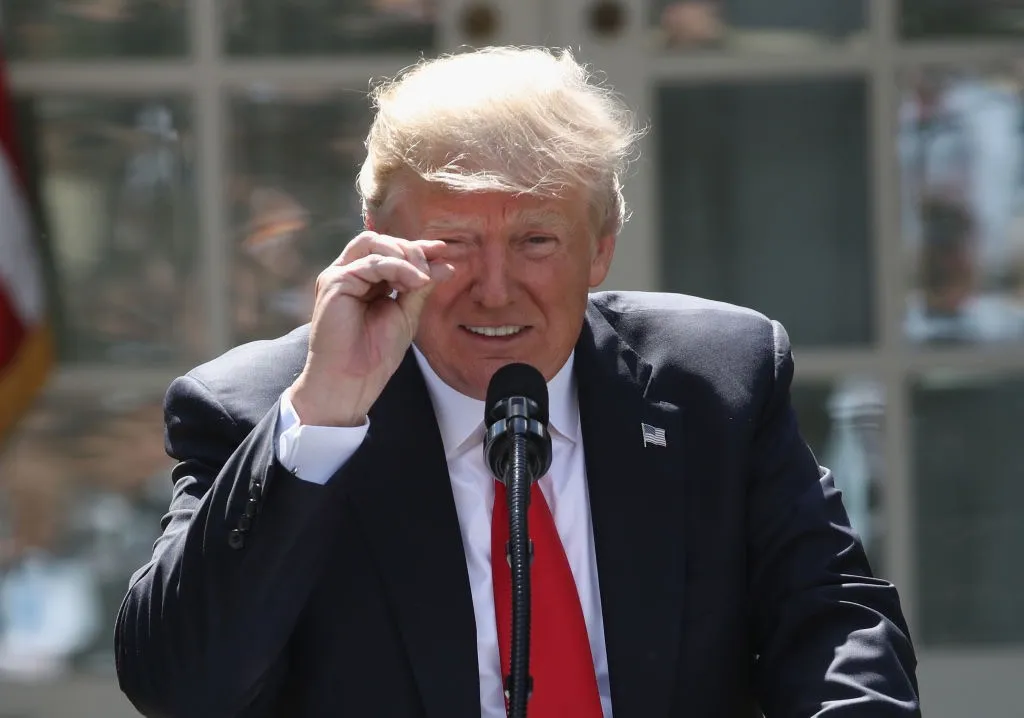
A comment that Donald Trump made yesterday in the White House Rose Garden when he announced the United States would pull out of the international Paris climate agreement was not based in science.
Trump said yesterday (June 1): "Even if the Paris Agreement were implemented in full, with total compliance from all nations, it is estimated it would only produce a 2/10 of one degree — think of that. This much….Celsius reduction in global temperature by the year 2100. Tiny, tiny amount."
The agreement's signatories aim to keep global warming below 3.6 degrees Fahrenheit (2 degrees Celsius) of preindustrial levels this century, with the more ambitious goal of keeping that warming to below 2.7 degrees F (1.5 degrees C). Signatory nations agree to make voluntary emissions cuts to meet these goals, saying those cuts will become stricter as time goes on. At the rate these cuts are progressing, an analysis by Climate Interactive found that those countries are falling short of meeting this 3.6 degrees F goal and rather would likely see about 6 degrees F (3.3 degrees C) of warming by 2100. Even so, that's well under the temperature increase projected if no deal were in place: 7.6 degrees F (4.2 degrees C).
Climate scientist Michael Mann, director of the Earth System Science Center at Pennsylvania State University, took particular exception to Trump's comment, tweeting yesterday: "Donald Trump just lied to the world. Paris accord WITHOUT further progress would cut warming by 1C. W/ ratcheting up, nearly 3C!"
Climate Interactive found that by not following through on its Paris climate commitment, the United States would spew an additional 1.4 gigatons of carbon dioxide into the atmosphere each year through 2025, as compared with the U.S. following through on its commitment.
Speaking at a roundtable discussion this morning (June 2) with Democracy Now, Mann schooled Trump a bit further on his comment:
"He was only off by a factor of 10, because [the Paris Agreement] will shave at least a degree Celsius and with proper ratcheting up, it will literally cut the projected warming in half, getting us onto a path where we could see stabilizing the warming below 2 degrees Celsius, what most scientists who study the impacts of climate change will tell you constitutes the level of dangerous interference with the climate."
Original article on Live Science.
