Live Science Plus





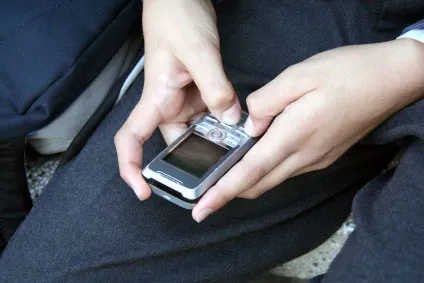
Texting long messages can be a pain in the neck — literally.
The repetitive action of working your fingers across the number pad of your cell phone can cause some of the same chronic pain problems previously confined to those who'd spent a lifetime typing, a new study suggests.
The possible connection is particularly worrying given how much teens and young adults — and increasingly those in professional settings — are texting nowadays, said Judith Gold of Temple University in Philadelphia, who carried out one of the first studies on the potential connection.
Article continues belowText messaging is a fairly new technology, Gold says, so this is a new area of research for those who study ergonomics. But the links between carpal tunnel syndrome, bursitis, and tendonitis for office workers and others who spend much of their day typing are firmly established, and "given the similarities in body position, findings from research on overuse injuries from computers could be applicable" to texting, Gold said.
"The way the body is positioned for texting – stationary shoulders and back with rapidly moving fingers – is similar to the position for typing on a computer," Gold explained.
Previous research has found pain in the elbow associated with too much thumb texting. Doctors' case reports have also referenced individual instances of "texting tendonitis" and "Blackberry thumb," Gold said.
"That suggests that there is something going on," Gold told LiveScience.
To look for a broader link between texting and chronic pain, Gold and her colleagues sent a questionnaire to 138 college students asking them to report the number of text messages they sent per day (in four categories: 0, 1-10, 11-20, 21+ messages) and to point out any discomfort they felt on a body map.
The research showed an association between number of text messages sent per day and shoulder discomfort. The effect seemed to be particularly pronounced in males, though Gold says she doesn't know why that would be.
"What we've seen so far is very similar to what we see with office workers who've spent most of their time at a computer," Gold said.
However, Gold's study did not control for the amount of time the people surveyed also spent typing on computers, which could be affecting the results.
Gold says that more research needs to be done to control for computer use and confirm the texting-pain connection.
"It's a new issue and I think the jury's still out," she said.
Gold's findings were presented at the annual meeting of the American Public Health Association, held last week in Philadelphia.
- Video – A Genetic Cure for Pain
- 5 Painful Facts You Need to Know
- Pain: News & Information