 Live Science Plus





You are now subscribed
Your newsletter sign-up was successful
Want to add more newsletters?
Delivered Daily
Daily Newsletter
Sign up for the latest discoveries, groundbreaking research and fascinating breakthroughs that impact you and the wider world direct to your inbox.
Once a week
Life's Little Mysteries
Feed your curiosity with an exclusive mystery every week, solved with science and delivered direct to your inbox before it's seen anywhere else.
Once a week
How It Works
Sign up to our free science & technology newsletter for your weekly fix of fascinating articles, quick quizzes, amazing images, and more

Delivered daily
Space.com Newsletter
Breaking space news, the latest updates on rocket launches, skywatching events and more!
Once a month
Watch This Space
Sign up to our monthly entertainment newsletter to keep up with all our coverage of the latest sci-fi and space movies, tv shows, games and books.
Once a week
Night Sky This Week
Discover this week's must-see night sky events, moon phases, and stunning astrophotos. Sign up for our skywatching newsletter and explore the universe with us!
Join the club
Get full access to premium articles, exclusive features and a growing list of member rewards.
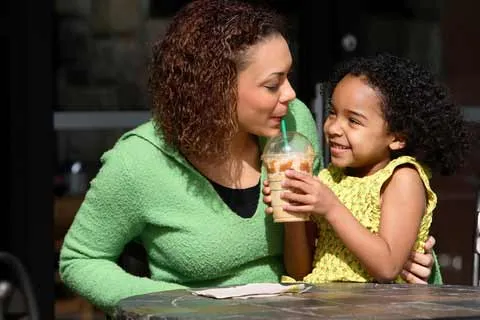
I have recently become a single mother. After 10 years of sharing child care with a man, I am now in charge of everything, and like all single mothers, I am pretty tired. I also feel oddly unsettled — it just doesn't seem right for one person to go it alone as a parent, no matter the recent statistics showing that 25 percent of American household are now headed by single parents. But reading anthropologist Sarah Blaffer Hrdy's new book, "Mothers and Others; The Evolutionary Origins of Mutual Understanding" (Belknap Press), I realize that unsettled is exactly how I should feel because humans were simply not designed to bring up children all on their own. The idea that we need each other goes against what has become the accepted theory about the evolution of behavior. For decades, evolutionary biologists have claimed that all organisms are basically selfish. The game of reproductive success, they have explained over and over, is won by those who are successful at passing their genes onto the next generation. As such, every animal, including humans, should be self-centered. At the most basic, the biologists say, our selfish genes compel us to stay alive, find the best mates, and have the most babies, and to always think of ourselves before others. Hrdy, a staunch evolutionist, is the first to admit that this now traditional view of individual behavior is ready for revision. The new view, she and others claim, must include the fact that cooperation, not just competition and selfishness, is also part of our nature. Her thesis is simple: We are social animals that need each others to survive, and so humans are born with the ability to understand how others feel (empathy), and to aid others, even if we don't share genes in common. Support for this approach comes from anthropologists who have tracked nonhuman and human primate behavior and discovered endless examples of cooperation. Neuroscientists and psychologists have also demonstrated that peoples' brains biochemically respond to others in need, and there are a thousand ways in which we act on those feelings. Taking this idea one step further, Hrdy points out that cooperation driven by empathy was probably also instrumental to ancient patterns of child care. As hunters and gatherers, our ancestors relied on each other, and they must have shared the care of dependent babies and rowdy children. Bands of humans probably included mothers and sisters, grandmothers, and fathers, and everyone must have played a part in the communal care of kids, just as they all played a part in getting food. Humans are experts in keeping track of networks of relationships and knowing who will cooperate and who is just a taker, and these tallies probably kept the community functioning. Given this history, my life as a single mother is at odds with how I, and my child, are designed to operate. I am supposed to have a band of others to help out, and my child is supposed to be caught by that net of friends and kin. With this in mind, I've decided to act on Hrdy's advice next time I am pressed, and I do know several friends, good humans all, who are clearly willing to give their time and services to co-parent with me when I need it. And this deal will work, because they know I, too, am the kind of good human who will respond and take care of their kids when they need help as well.
- Video – A Mother's Touch
- Children: News and Information
- Top 10 Missing Links
Meredith F. Small is an anthropologist at Cornell University. She is also the author of "Our Babies, Ourselves; How Biology and Culture Shape the Way We Parent" (link) and "The Culture of Our Discontent; Beyond the Medical Model of Mental Illness" (link). Her Human Nature column appears each Friday on LiveScience.
