 Live Science Plus





You are now subscribed
Your newsletter sign-up was successful
Want to add more newsletters?

Delivered Daily
Daily Newsletter
Sign up for the latest discoveries, groundbreaking research and fascinating breakthroughs that impact you and the wider world direct to your inbox.

Once a week
Life's Little Mysteries
Feed your curiosity with an exclusive mystery every week, solved with science and delivered direct to your inbox before it's seen anywhere else.

Once a week
How It Works
Sign up to our free science & technology newsletter for your weekly fix of fascinating articles, quick quizzes, amazing images, and more
Delivered daily
Space.com Newsletter
Breaking space news, the latest updates on rocket launches, skywatching events and more!
Once a month
Watch This Space
Sign up to our monthly entertainment newsletter to keep up with all our coverage of the latest sci-fi and space movies, tv shows, games and books.
Once a week
Night Sky This Week
Discover this week's must-see night sky events, moon phases, and stunning astrophotos. Sign up for our skywatching newsletter and explore the universe with us!
Join the club
Get full access to premium articles, exclusive features and a growing list of member rewards.
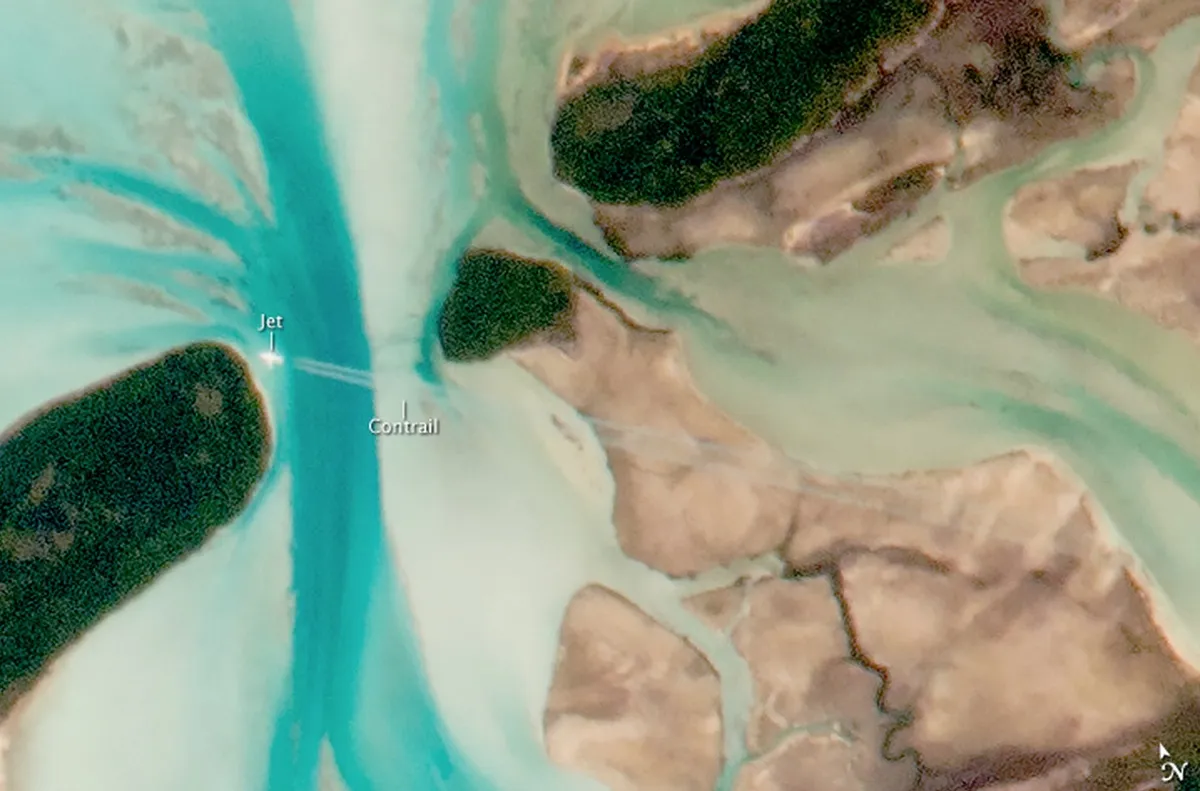
The turquoise waters snaking through Great Exuma Island in the Bahamas are almost unbelievably vivid in a new photograph taken from space.
But zoom in, and the picture becomes even more impressive.
The image was acquired July 15, 2015, according to NASA's Earth Observatory. The Bahamas and their prominent tidal channels are recognizable landmarks for astronauts aboard the International Space Station, who whiz by about 249 miles (400 kilometers) overhead. [See Photos of Streaming Contrails from High-Flying Jets]
Great Exuma Island is one of the bigger isles among a string of small cays in the Bahamas, many of which are private playgrounds for the fantastically wealthy. Great Exuma is about 37 miles (59 km) long. It's part of a string of 365 cays, some privately owned.

The cays were a haven for British Loyalists who fled the United States after the American Revolution. One prominent Exuma landowner, the Englishman John Rolle, left his property there to his slaves. His name is still prominent on the islands, both as a surname and as the name of towns such as Rolleville.
The cays are also home to natural beauty, not limited to clear blue waters and sparkling white beaches. Moriah Harbour Cay National Park protects 16,800 acres of sand dunes, seagrasses and mangroves, according to the Bahamas National Trust. The area is an important ecosystem for nesting birds.
At "pig beach" on Big Major Cay, a mysterious colony of domesticated pigs plies the water, begging food from tourist boats. No one knows how pigs came to live on the otherwise uninhabited island; a shipwreck or sailors dropping off the pigs as a sort of living food bank for later trips might be the cause, according to the official website of the Bahamas. The swimming pigs are now a major tourist draw.
The cays are also home to a much older form of life. Stromatolites, lumpy rocklike structures created by microbial mats, still thrive here, particularly off the coast of Lee Stocking Island. Stromatolites are some of the oldest forms of life on Earth, dating back 3.5 billion years.
From space, the tidal rhythms of life are visible. In this image, about 8.9 miles (14.24 km) of cays are visible, with deep, blue channels cutting through them. The darker the water, the deeper it is; light blue represents water less than 80 feet (25 m) deep, according to Earth Observatory. The jet cuts across the largest channel in the upper right corner of the photograph.
Follow Stephanie Pappas on Twitterand Google+. Follow us @livescience, Facebook& Google+. Original article on Live Science.

