Extinct Mammoths Could Be Cloned

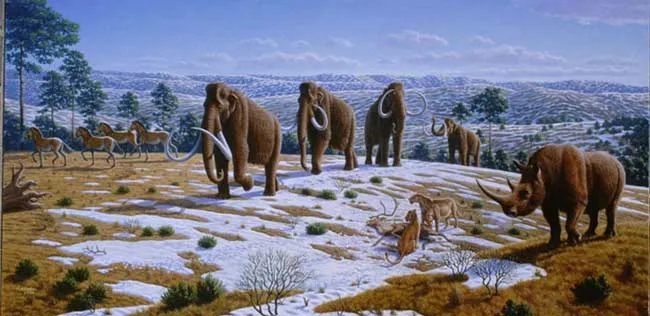
Japanese scientists cloned mice that had been frozen 16 years and whose cells had burst, according to Reuters. Since the mice were not particularly well preserved, the researchers say their nuclear transfer techniques "could be used to 'resurrect' animals" such as mammoths.
Researchers have been aiming for this breakthrough for years. Parallel efforts in recent years have led to decoding the genetics of the extinct cave bear and a partial decoding of the mammoth genome. "Our discovery means that recreating extinct hybrid animals is theoretically possible," researchers said when that breakthrough came in 2005.
In northern Siberia, researchers are attempting to create Pleistocene Park by restoring a large area of wetlands and forest to the dry landscape that existed more than 10,000 years ago. They are re-introducing herbivores and predators they think will alter the biology and ecology of the region to its previous state.
Article continues belowHow far back might resurrection go? Nobody is expecting T. rex to roam the planet again, but tissue from the beast has been recovered.
This article is from the LiveScience Water Cooler: What people are talking about in the world of science and beyond.
Get the world’s most fascinating discoveries delivered straight to your inbox.

Robert is an independent health and science journalist and writer based in Phoenix, Arizona. He is a former editor-in-chief of Live Science with over 20 years of experience as a reporter and editor. He has worked on websites such as Space.com and Tom's Guide, and is a contributor on Medium, covering how we age and how to optimize the mind and body through time. He has a journalism degree from Humboldt State University in California.