













Bioterror Threat? New Smallpox-Related Virus Raises Alarms

Smallpox, the disfiguring scourge that killed an estimated 300 million to 500 million people in the 20th century alone, has been eradicated worldwide, thanks to an aggressive vaccination campaign.
But smallpox has relatives that are also deadly: The virus that causes smallpox is an orthopoxvirus, a family of viral agents that also cause cowpox, monkeypox, vaccinia and other diseases.
And now, the Centers for Disease Control and Prevention (CDC) has announced that a new orthopoxvirus has been discovered in two men from the nation of Georgia in western Asia. Though both men survived the disease, disease experts aren't taking any chances. [5 Most Likely Real-Life Contagions]
A bioterrorism threat?
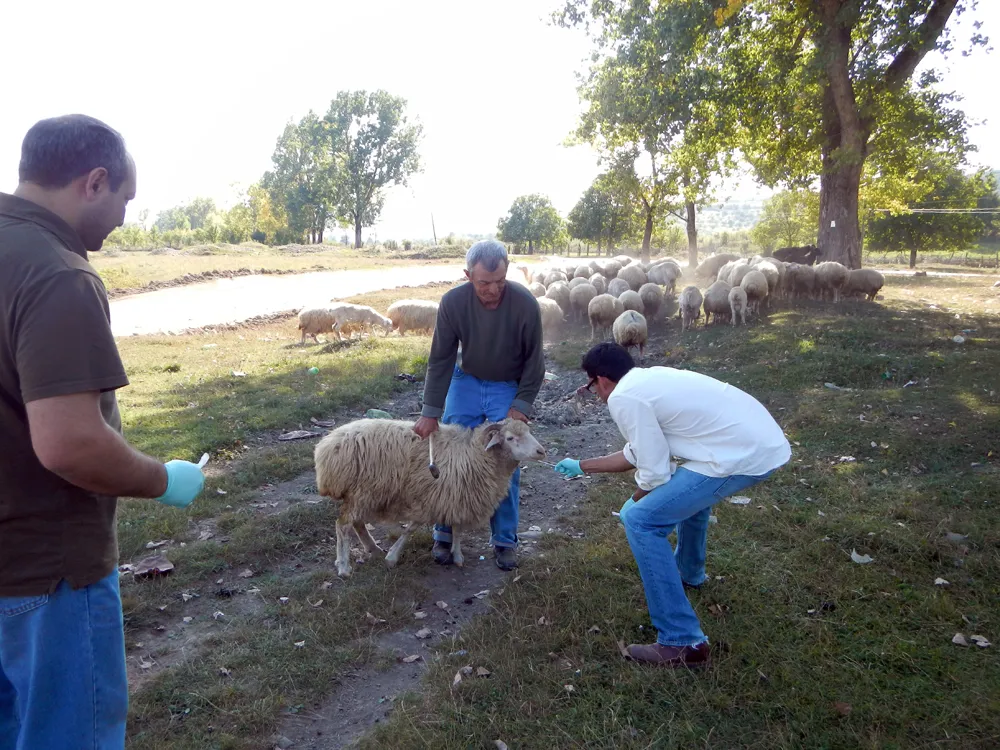
Dr. Neil Vora, a "disease detective" with the CDC's Epidemic Intelligence Service (EIS), flew to Georgia to investigate the unusual case. The men — both herdsmen who had daily contact with cows and other livestock — had painful blisters on their bodies, a fever and swollen lymph nodes.
"We consider this family of viruses very important because smallpox could be used as a bioterrorism agent," Vora told NPR.
The bioterrorism potential of poxviruses is real enough that the U.S. government last year began to build a smallpox medicine stockpile large enough to treat 2 million people, according to The New York Times.
Get the world’s most fascinating discoveries delivered straight to your inbox.
"With today’s patterns of global travel and trade, disease can spread nearly anywhere within 24 hours," EIS chief Dr. Diana Bensyl said in a CDC statement. "There's still a lot left to do to improve health security and respond more quickly to outbreaks."
Making the leap from animals to humans
Vora and other infectious disease experts believe the new poxvirus spread to the two men from cattle. Most of the orthopoxviruses typically infect animals, then jump to humans who have close contact with animals carrying the viruses.
"We haven't found any evidence of human-to-human transmission, so far," Vora told NPR. "But how many people are getting sick? Are animals getting sick? We don't know ... we don't know if it has caused any deaths."
So little is known about the new virus, in fact, that it doesn't even have a name yet. But a CDC analysis of the herdsmen's blood samples revealed that the men had antibodies to an orthopoxvirus, though the antibodies didn't match those to any virus known to exist.
An 'immunization gap' opens
Since the successful eradication of smallpox — a global effort that was declared completed in 1979 — the routine vaccination of children against the disease was stopped.
But that may have opened an "immunization gap," according to Vora.
"When you vaccinate a person with one of these viruses, it protects [against] other viruses in the family," Vora told NPR. "Since smallpox vaccinations stopped, there's some indication that other ... orthopoxviruses have started to increase in their incidence because there's less immunity."
Follow Marc Lallanilla on Twitter and Google+. Follow us @livescience, Facebook & Google+. Original article on Live Science.
