













Lab-Made Heart Represents 'Moonshot' for 3D Printing

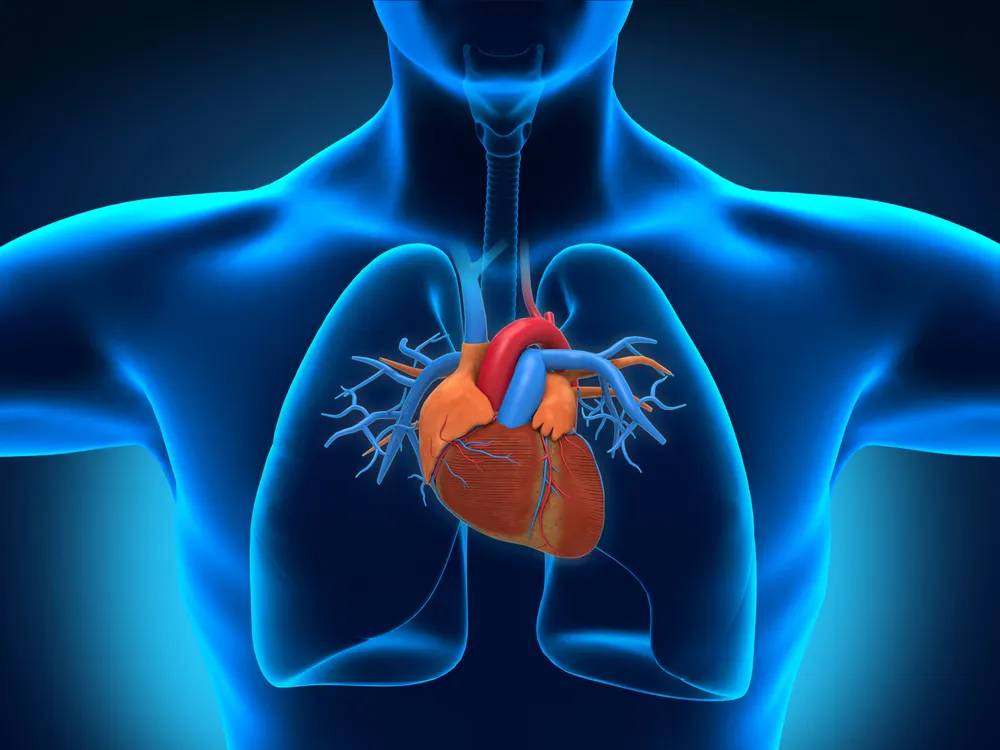
An ambitious 3D-printed heart project aims to make a natural organ replacement for patients possible within a decade. But the researcher heading the "moonshot" effort also believes 3D-printing technology must harness the self-organizing power of biology to get the job done.
The idea of a 3D-printed heart grown from a patient's own fat stem cells comes from Stuart Williams, executive and scientific director of the Cardiovascular Innovation Institute in Louisville, Ky. His lab has already begun developing the next generation of custom-built 3D printers aimed at printing out a complete heart with all its parts — heart muscle, blood vessels, heart valves and electrical tissue.
"We can print individual components of the heart, but we're building next-generation printers to build the heart from the bottom up," Williams said.
The heart represents one of the most ambitious goals for researchers working to create 3D-printed organs within the field of regenerative medicine. The ability of 3D printing to build human tissue by laying down living cells layer by layer has already allowed researchers to create small chunks of organs such as livers and kidneys — often by using stem cells extracted from fat or bone marrow as the source material. [7 Cool Uses of 3D Printing in Medicine]
Williams and the Cardiovascular Innovation Institute have started out by first using 3D printing to create individual parts of what they have deemed the "bioficial" heart. That piecemeal approach could eventually allow researchers to print and piece together a fully functional heart within a week.
"I took a step back and looked at my colleagues, and said, 'Why don’t we build it like a large airplane?'" Williams told LiveScience. "Separate the organ into separate components, figure out the best way to make the components, and then put them together."
But building full-size organs also requires researchers to print human tissue in a way that includes the intricate networks of tiny blood vessels that keep the organs healthy. Williams envisions 3D printing as an ideal way to make smaller blood vessels — he and his colleagues have already built large blood vessels for transplant use in surgeries using methods other than 3D printing.
Get the world’s most fascinating discoveries delivered straight to your inbox.
Still, 3D printers can only do so much bioengineering when working at the tiniest scales. The best printers may only print structures with the size of millimeters, whereas the smallest blood vessels can have a width of just a few microns, Williams explained, where 1 millimeter is equal to 1,000 microns.
That's why 3D printing may only get researchers partway toward the goal of creating a complete heart. Instead, researchers will have to rely upon the natural self-organizing tendency of cells to knit together blood vessels and eventually connect everything within a 3D-printed organ — a process that could take place within 24 hours.
"We will be printing things in the order of tens of microns or more like hundreds of microns, and then cells will undergo their biological developmental response in order to self-organize correctly," Williams said.
Most researchers don't expect full-size, 3D-printed organs to become reality anytime within the next 10 or even 15 years, but the Cardiovascular Innovation Institute continues to forge ahead with its goal of building a 3D-printed heart within a decade. Williams expects the next generation of "bioprinters" to begin rolling out in December.
You can follow Jeremy Hsu on Twitter @jeremyhsu. Follow us @livescience, Facebook & Google+. Original article on LiveScience.
