 Live Science Plus


You are now subscribed
Your newsletter sign-up was successful
Want to add more newsletters?

Delivered Daily
Daily Newsletter
Sign up for the latest discoveries, groundbreaking research and fascinating breakthroughs that impact you and the wider world direct to your inbox.

Once a week
Life's Little Mysteries
Feed your curiosity with an exclusive mystery every week, solved with science and delivered direct to your inbox before it's seen anywhere else.

Once a week
How It Works
Sign up to our free science & technology newsletter for your weekly fix of fascinating articles, quick quizzes, amazing images, and more

Delivered daily
Space.com Newsletter
Breaking space news, the latest updates on rocket launches, skywatching events and more!

Once a month
Watch This Space
Sign up to our monthly entertainment newsletter to keep up with all our coverage of the latest sci-fi and space movies, tv shows, games and books.

Once a week
Night Sky This Week
Discover this week's must-see night sky events, moon phases, and stunning astrophotos. Sign up for our skywatching newsletter and explore the universe with us!
Join the club
Get full access to premium articles, exclusive features and a growing list of member rewards.
"The Healthy Geezer" answers questions about health and aging in his weekly column.
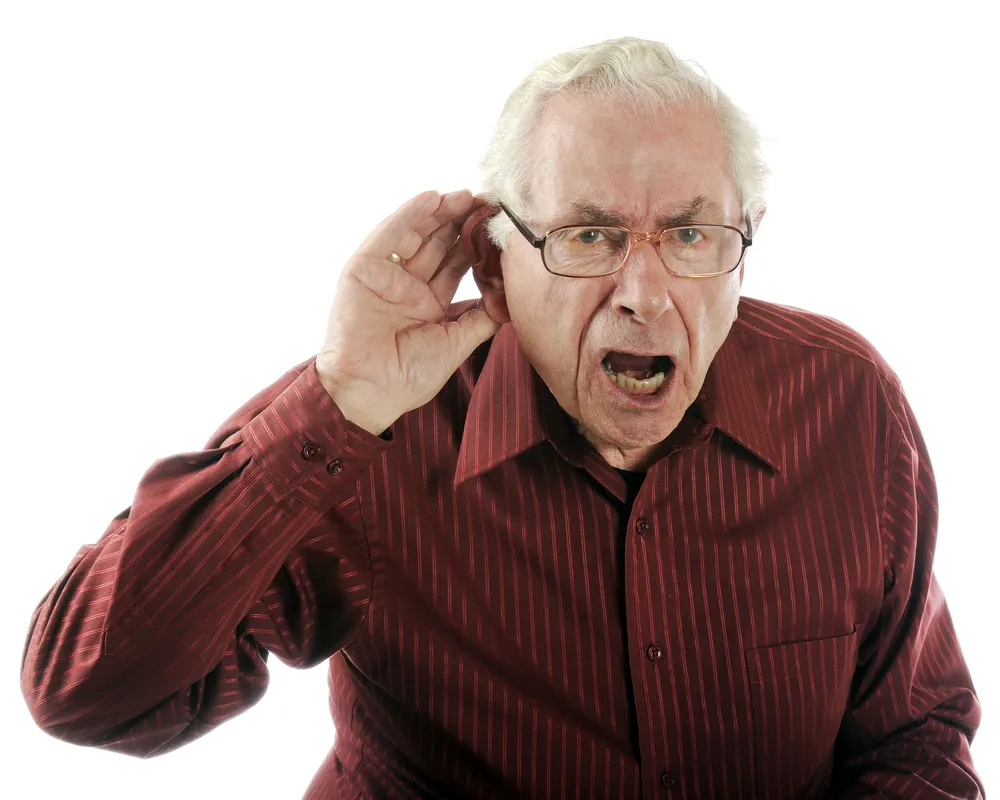
Question: My wife just turned 70 and her hearing isn't what it used to be. Do you have any suggestions that will improve my ability to communicate with her?
Presbycusis, one form of hearing loss, occurs with age. It can be caused by changes in the inner ear, auditory nerve, middle ear, or outer ear. Other causes include exposure to loud noise, heredity, head injury, infection, illness, certain prescription drugs and circulation problems such as high blood pressure.
Tinnitus, common in older people, is characterized by a ringing, hissing or roaring sound in the ears. It's frequently caused by exposure to loud noise or certain medicines. Tinnitus can accompany any type of hearing loss.
A hearing aid can help your wife. While it won't restore normal hearing, it will increase her awareness of sounds and what made them. A hearing aid magnifies sound vibrations. Larger vibrations are converted into signals that are sent to the brain. However, there are limits to the amplification a hearing aid can provide. And if the inner ear is too damaged, even large vibrations will not be converted into signals.
Since your wife's hearing seems to be a problem, she should have it checked by her personal physician. If her hearing has diminished, the doctor will probably refer her to an otolaryngologist or audiologist.
An otolaryngologist is a physician who specializes in treating the ear, nose and throat. An audiologist is a health professional who conducts tests to define hearing loss. Many otolaryngologists have audiologist associates in their offices.
Meanwhile, here are some tips that can help you get your words across to your wife:
- Be patient.
- Minimize or eliminate background noise before conversing with your wife.
- Enunciate well without distorting your speech. Don’t mumble.
- Be expressive. Using hand gestures and facial expressions will clue your wife in to what you're saying.
- Position yourself four to six feet from your wife before you speak to ensure that she can see your face. And don't cover your mouth or chew when you talk.
- Ask your wife to repeat what you've said to make sure she understands you. Rephrase what you've said if she doesn't.
- Speak at a normal tempo — not too quickly and not too slowly.
- Speak more loudly, but don't shout. Shouting distorts your words. Also, don't lower the volume of your voice at the end of a sentence.
If you would like to read more columns, you can order a copy of "How to be a Healthy Geezer" at www.healthygeezer.com.
All rights reserved © 2013 by Fred Cicetti
