 Live Science Plus





You are now subscribed
Your newsletter sign-up was successful
Want to add more newsletters?

Delivered Daily
Daily Newsletter
Sign up for the latest discoveries, groundbreaking research and fascinating breakthroughs that impact you and the wider world direct to your inbox.

Once a week
Life's Little Mysteries
Feed your curiosity with an exclusive mystery every week, solved with science and delivered direct to your inbox before it's seen anywhere else.

Once a week
How It Works
Sign up to our free science & technology newsletter for your weekly fix of fascinating articles, quick quizzes, amazing images, and more

Delivered daily
Space.com Newsletter
Breaking space news, the latest updates on rocket launches, skywatching events and more!

Once a month
Watch This Space
Sign up to our monthly entertainment newsletter to keep up with all our coverage of the latest sci-fi and space movies, tv shows, games and books.

Once a week
Night Sky This Week
Discover this week's must-see night sky events, moon phases, and stunning astrophotos. Sign up for our skywatching newsletter and explore the universe with us!
Join the club
Get full access to premium articles, exclusive features and a growing list of member rewards.
"The Healthy Geezer" answers questions about health and aging in his weekly column.
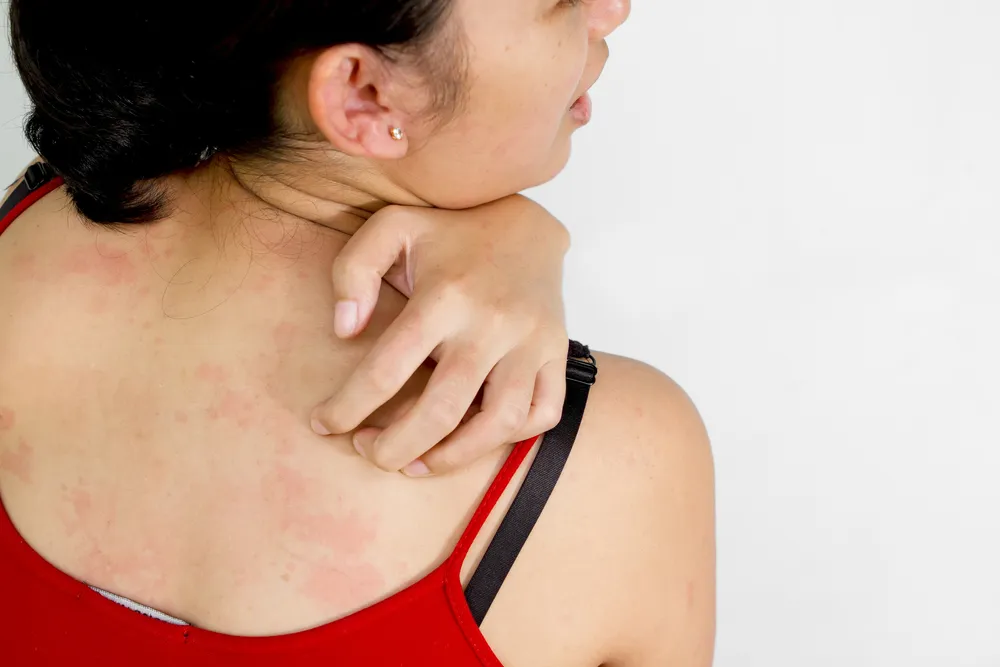
Question: What causes rashes?
Answer: The most common cause of a rash is contact dermatitis, an inflammation of the skin that comes from direct contact with irritants or allergens. A red, itchy rash from contact dermatitis isn't contagious, and usually goes away in two to four weeks.
The cause of contact dermatitis is direct contact with irritants or allergens. These include: detergents, soaps, makeup, deodorant, clothing, chemicals, rubber, metals, jewelry, fragrances, plants and medicinal lotions.
There are two types of contact dermatitis.
Irritant contact dermatitis is caused by a substance such as bleach that irritates the skin. Allergic contact dermatitis is caused by a reaction to an allergen, which is a substance that induces an allergy.
If the cause of a rash isn't obvious, you may have to get a "patch test." During one of these tests, small amounts of possible allergens are place on patches that are attached to your skin for two days. If you are allergic to a tested substance, a bump will appear on your skin.
You should seek medical attention for a rash when it interferes with your sleep or your normal daytime activities, you are in pain, you think you have an infection, or home care hasn't worked.
If you scratch a rash for a long time, you can get neurodermatitis, a condition in which skin becomes thick. Persistent scratching can also lead to infection, scars or color changes in your skin.
To treat contact dermatitis you should:
- Avoid the irritants.
- Use topical creams containing hydrocortisone, and oral corticosteroids and antihistamines to reduce the inflammation and itching.
- Stop scratching.
- Apply cool, wet compresses.
- Cover the affected area with bandages to protect the skin and prevent scratching.
- Bathe in cool water with baking soda or finely ground oatmeal.
- Wear smooth-textured cotton clothing to avoid irritation.
- Wash with mild soaps without dyes or perfumes, and rinse thoroughly.
- Use plastic gloves to avoid contact with household cleaners.
- When laundering, use a mild, unscented detergent and an extra rinse cycle.
The following are some common allergens:
- Skin products. Perfumes, lotions, and cosmetics may cause allergic contact dermatitis. Others are sensitive to the preservative chemicals needed to prevent skin care products from spoiling.
- Poison plants. These include poison ivy, poison oak, and poison sumac.
- Rubber. Chemical additives in rubber can cause a reaction. Rubber gloves can cause dermatitis. Synthetic gloves can be used instead. Women with a rubber allergy can wear undergarments with spandex if they do not have rubber-backed fasteners or edges. Bras without rubber are also available.
- Hair dyes. Some people are sensitive to paraphenylene-diamine (PPD). This ingredient is found in permanent hair dyes that are mixed with another chemical, such as peroxide, before application. Most people allergic to PPD can use temporary dyes.
- Nickel. Nickel is found in gold jewelry and metal alloys. Many chrome-plated objects contain enough nickel to produce a reaction in sensitive people. Buckles, zippers, buttons and can cause dermatitis.
- Chromates. Chromates contain chromium, and are commonly responsible for allergic contact dermatitis from cement, leather, some matches, paints, and anti-rust products. Chromates are also used to tan leather for shoes and can result in shoe dermatitis. Vegetable-tanned footwear can be used as an alternative.
If you would like to read more columns, you can order a copy of "How to be a Healthy Geezer" at www.healthygeezer.com.
All rights reserved © 2012 by Fred Cicetti
