














Falcon Comeback in Indiana: No Longer Endangered?

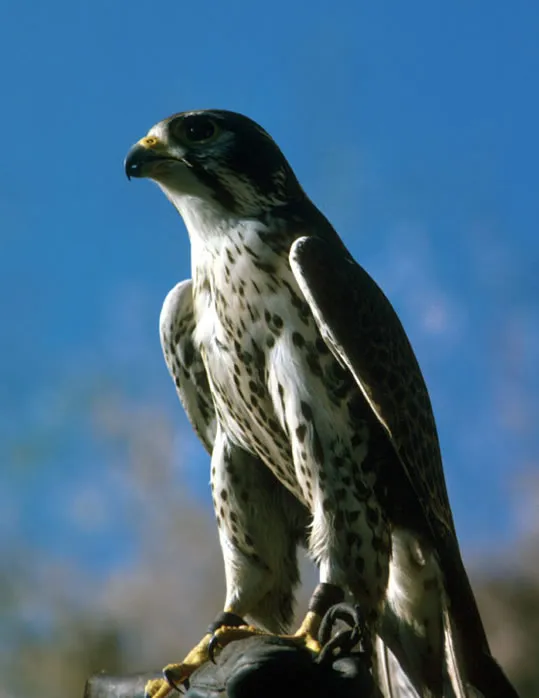
Peregrine falcons have swooped back from a precipitous decline in the 1960s, when they nearly went extinct in the Midwest and elsewhere in the country. But a ban on the pesticide DDT, reintroduction efforts and the birds' own versatility allowed them to soar back; in the state of Indiana, for example, the bird may be removed from the state's endangered list this summer, according to the Indianapolis Star.
Part of the reason they've been able to climb back is by adapting to urban areas, nesting in tall buildings instead of their usual cliffs and bluffs overlooking river valleys. "They've adapted to use these artificial sites, artificial cliffs," John Castrale, a biologist with the state's Department of Natural Resources, told the Indy Star. "That's really made a difference. They're really taking advantage of it."
The falcons eat smaller birds, and have learned to pick off pigeons and other feathered urbanites. There are about 20 nesting pairs of falcons in Indiana and about 300 falcon "couples" in the upper Midwest, the Star reported. The peregrine falcon can fly up to 200 mph (322 kph), making it the world's fastest animal, according to the U.S. Fish and Wildlife Service.
Email Douglas Main or follow him @Douglas_Main. Follow us @livescience, Facebook or Google+.
Get the world’s most fascinating discoveries delivered straight to your inbox.
