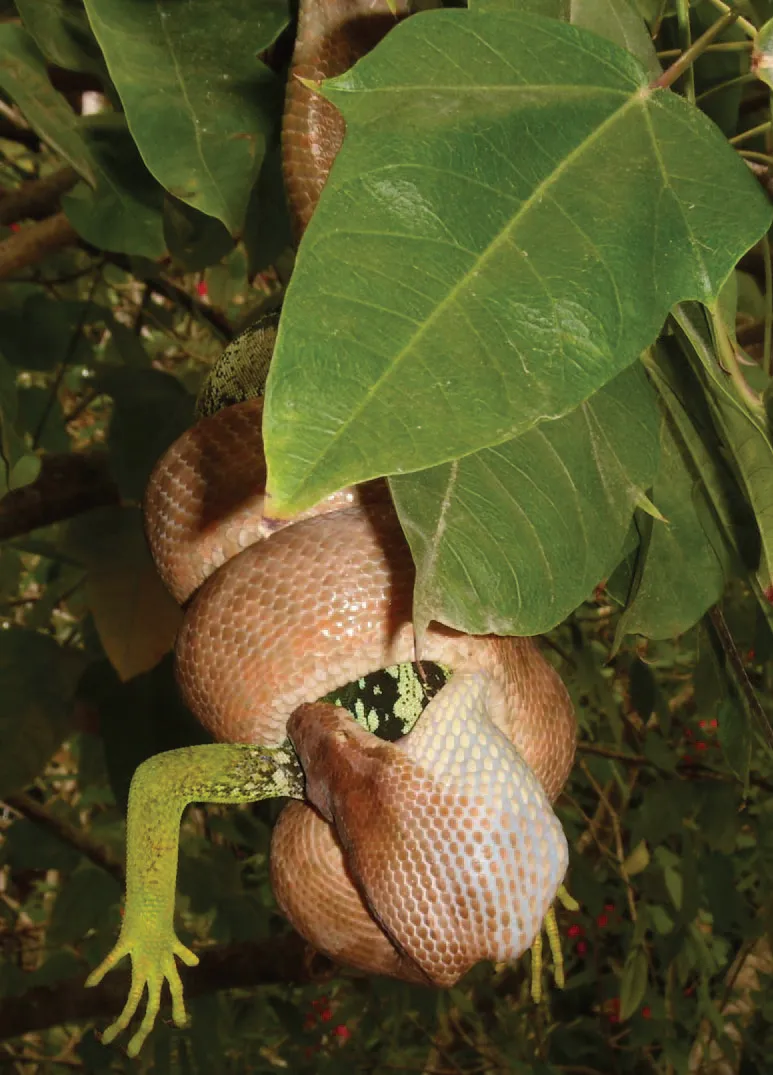
Boa Spotted Eating Endangered Iguana for First Time
Get the world’s most fascinating discoveries delivered straight to your inbox.
You are now subscribed
Your newsletter sign-up was successful
Want to add more newsletters?
Delivered Daily
Daily Newsletter
Sign up for the latest discoveries, groundbreaking research and fascinating breakthroughs that impact you and the wider world direct to your inbox.
Once a week
Life's Little Mysteries
Feed your curiosity with an exclusive mystery every week, solved with science and delivered direct to your inbox before it's seen anywhere else.
Once a week
How It Works
Sign up to our free science & technology newsletter for your weekly fix of fascinating articles, quick quizzes, amazing images, and more
Delivered daily
Space.com Newsletter
Breaking space news, the latest updates on rocket launches, skywatching events and more!
Once a month
Watch This Space
Sign up to our monthly entertainment newsletter to keep up with all our coverage of the latest sci-fi and space movies, tv shows, games and books.
Once a week
Night Sky This Week
Discover this week's must-see night sky events, moon phases, and stunning astrophotos. Sign up for our skywatching newsletter and explore the universe with us!
Join the club
Get full access to premium articles, exclusive features and a growing list of member rewards.
The Pacific boa usually eats skinks and geckos, and other small reptiles on the islands of Fiji where it is found. But it also has a more concerning prey: the endangered Fiji banded iguana, which is much larger than its common prey and — more importantly — deemed endangered by the International Union for Conservation of Nature.
A photo taken by Robert Fisher and his colleagues at the U.S. Geological Survey is the first time the boa has been observed eating this iguana, which was only discovered in 2008, according to ABC Science. The iguana is named Brachylophus bulabula, after the Fijian word for "hello" (bulabula).

The iguana's future is somewhat grim. There were once five species of iguanas in this genus (the taxonomic classification above species) on the Fijian islands. Two species have already gone extinct, due to habitat loss and predation from feral cats and mongooses, and another species is critically endangered, ABC Science reports.
Email Douglas Main or follow him @Douglas_Main. Follow us @livescience, Facebook or Google+.
Get the world’s most fascinating discoveries delivered straight to your inbox.